Connecting to Redash
Connection requirements
- To connect to Redash there are no special requirements besides having an account API key.
- To import all Redash objects, the account from which the API Key comes from has to be added to all groups and have admin permissions. Otherwise, only part of the objects will be properly imported.
Importing Metadata in Dataedo Portal
Entry point
To start the Metadata Import flow, make sure you have the Connection Manager role.
Then navigate to:
Connections → Add new connection → Redash
This will open the import wizard described in the following steps.
Step 1. Connection details
Provide the name of Connection, the required connection details, and an optional description.
A Connection in Dataedo represents a saved configuration for accessing a data source.
It can be reused for future imports and scheduling.
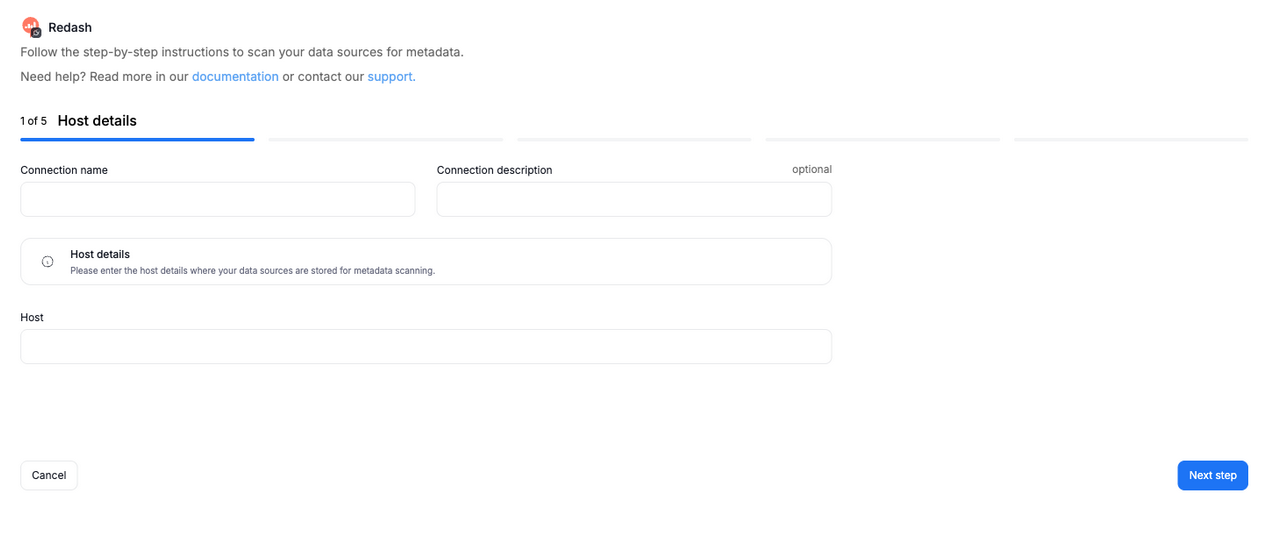
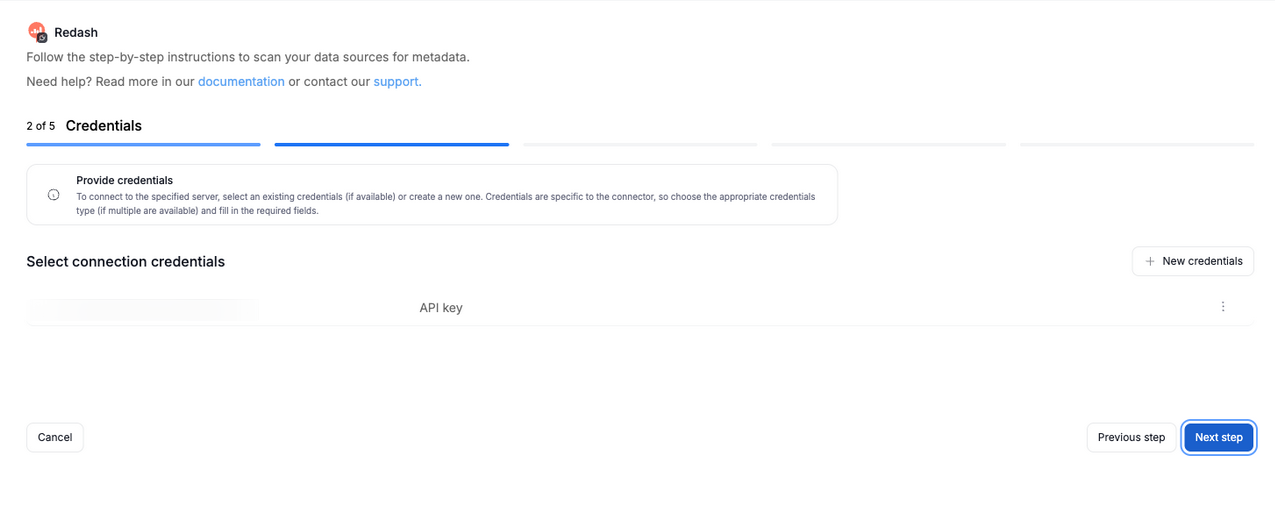
Step 2. Credentials
Choose credentials from the list of existing ones available for the selected connector, or add new credentials.
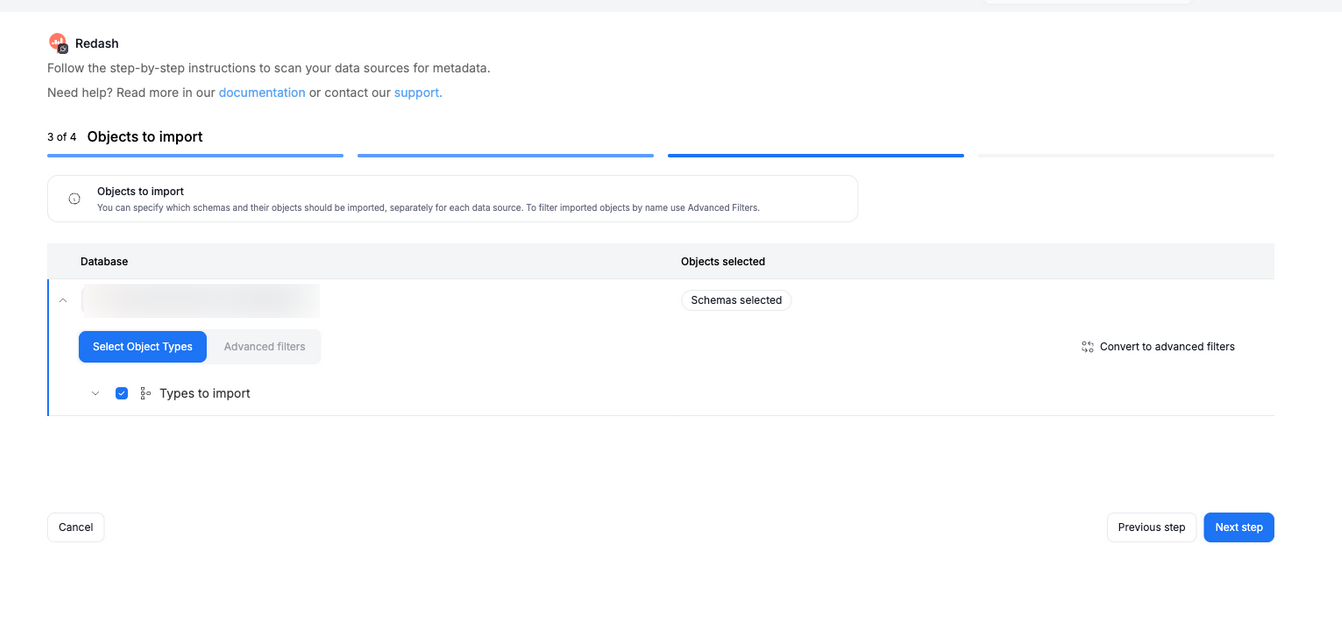
Step 3. Objects to import
For each selected database, you can refine which objects to import:
- Select schemas and object types (tables, views, procedures, etc.).
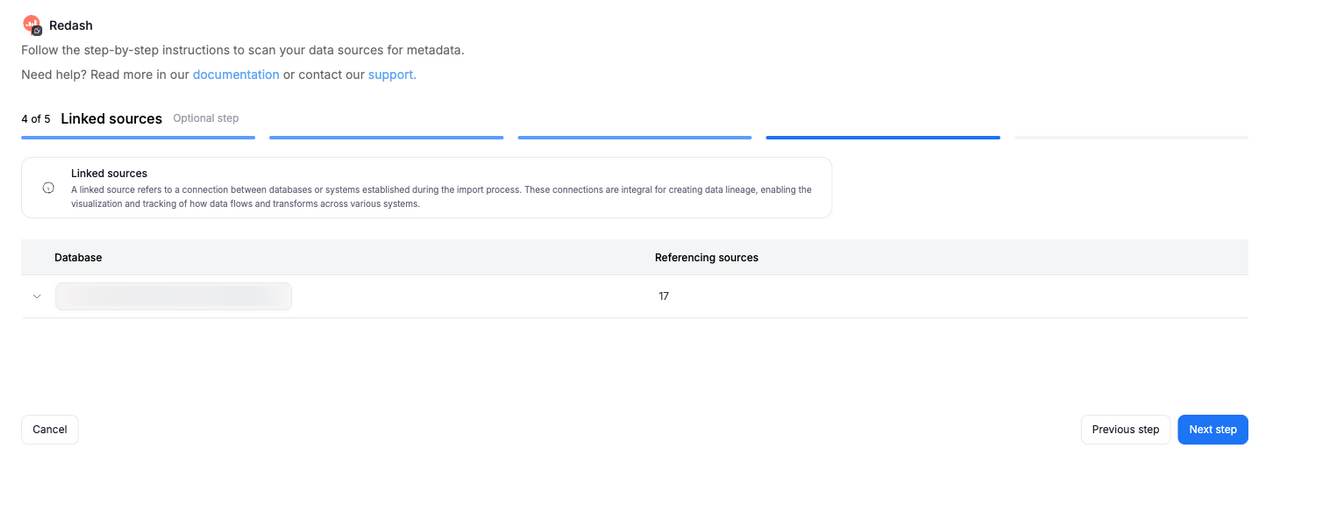
Step 4. Linked sources (optional)
A linked source refers to a connection between databases or systems established during the import process.
They are essential for data lineage, enabling visualization and tracking of how data flows and transforms across systems.
In this step, you can map linked sources to existing Dataedo sources. This mapping can also be updated later in the Connection details.
Step 5. Schedule
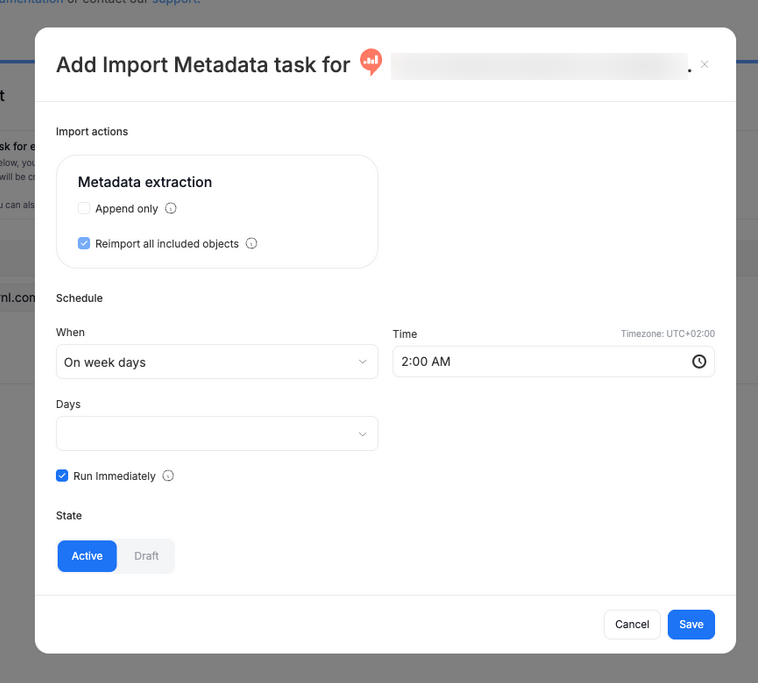
Configure scheduling options for each source individually:
- Define tasks you want to schedule (Metadata Import).
- Run daily, on selected weekdays, or on specific days of the month.
- Choose an exact time of execution.
- Task state:
Active– the task will run as scheduled.Draft– the task is saved but not executed until switched to Active.
- Run immediately – when checked, the task will also be executed right after clicking
Create connection.
Only one source in a metadata import can have Run immediately selected.
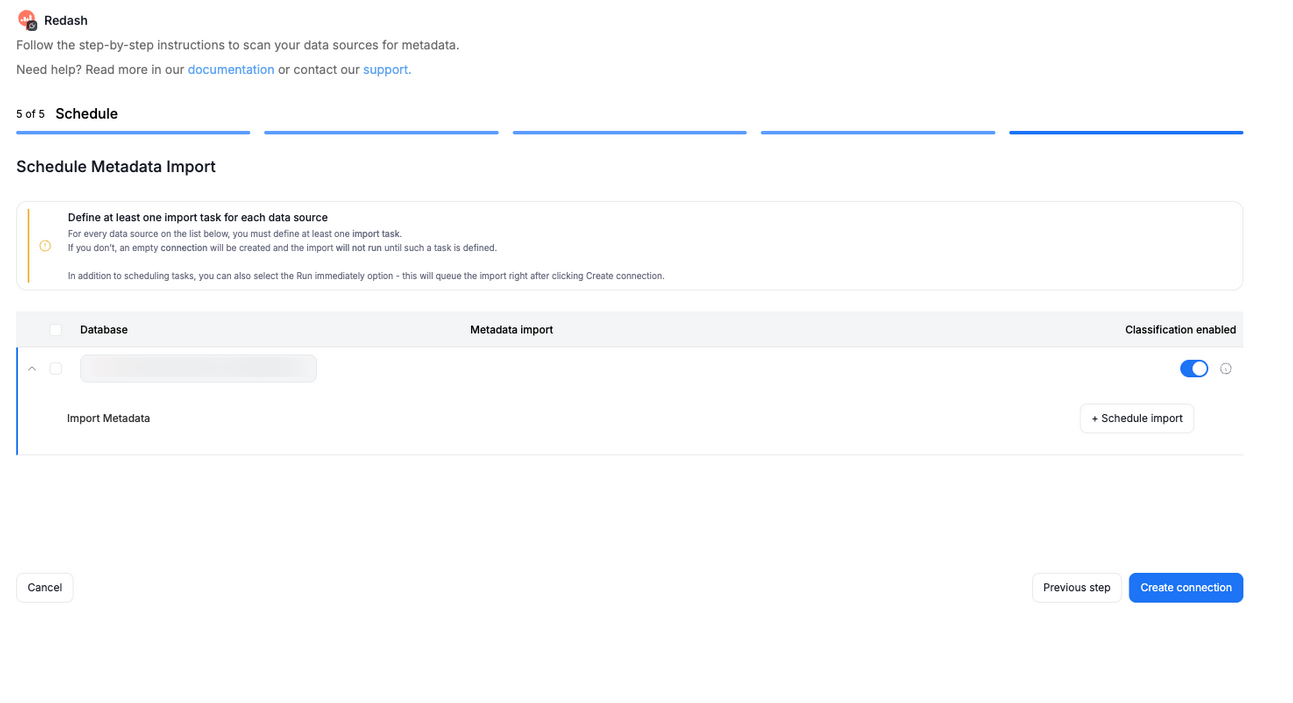
You must configure at least one import task in the schedule section.
If you skip this, an empty database will be created and no metadata will be imported.
Importing Metadata in Dataedo Desktop
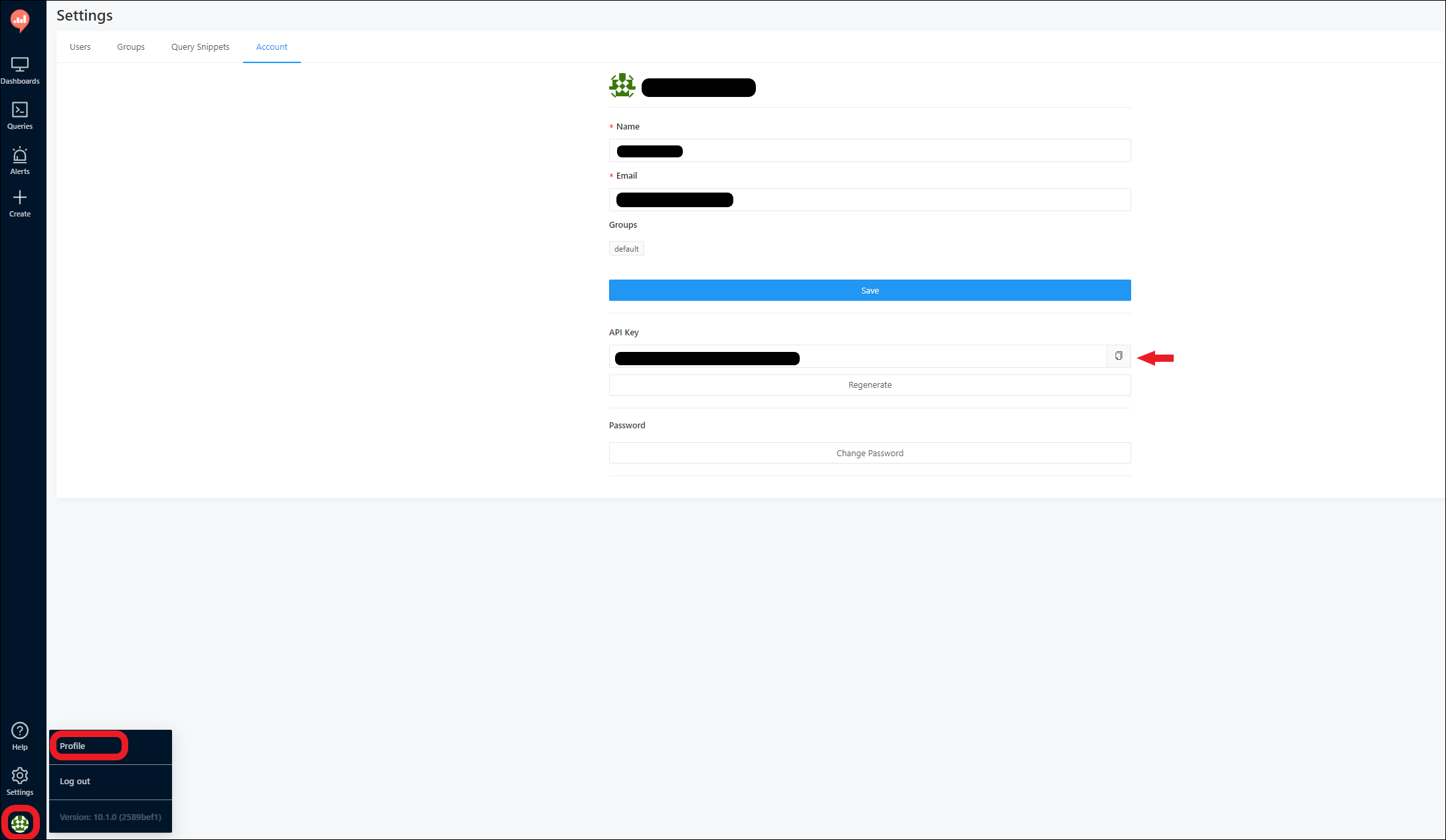
Getting API Key from Redash
To get your Account API Key, go to your profile and copy it using the built-in button.
Connecting in Dataedo
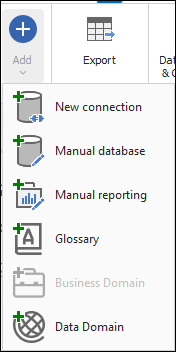
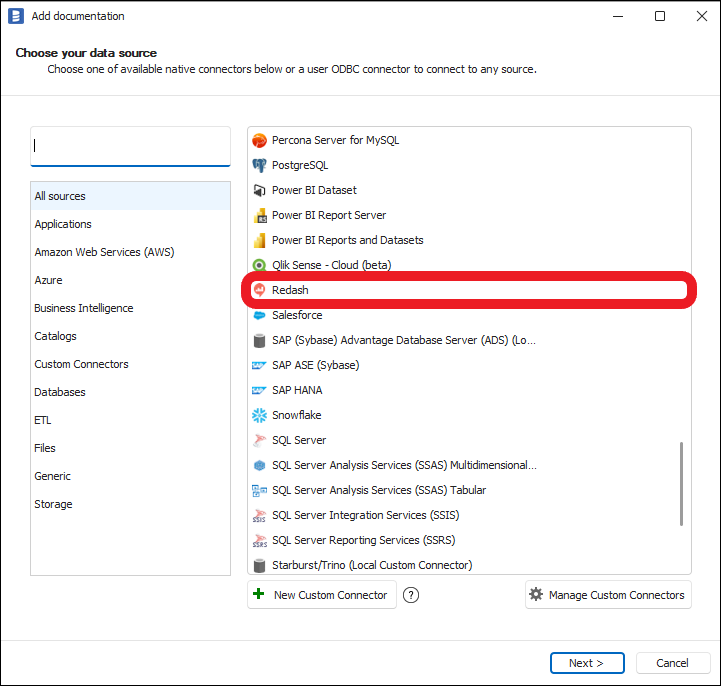
To connect to Redash, create new documentation by clicking Add and choosing New connection.
On the connection screen, choose Redash.
Provide connection details:
- Host - provide a host name or address where the database is located. E.g. https://redash.com, https://server17.ourdomain.com.
- API Key - provide your account API Key
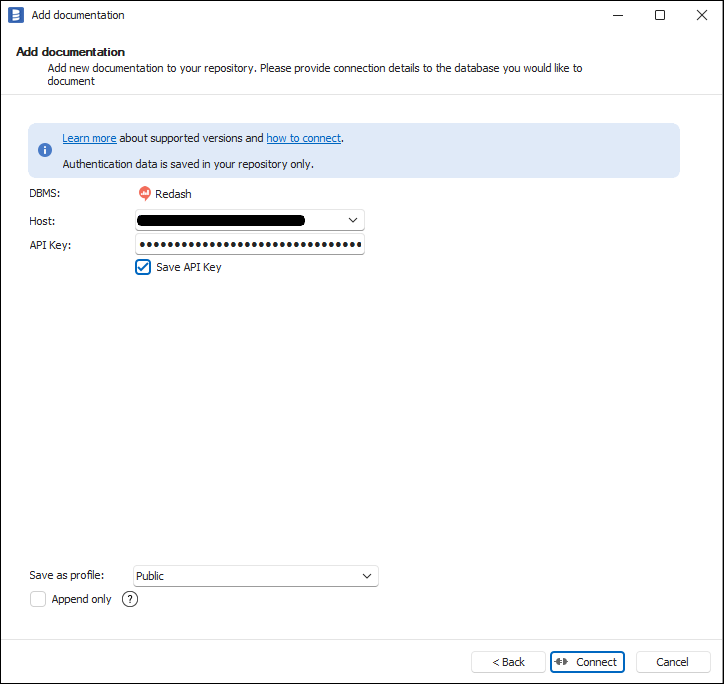
Saving API Key
You can save the API Key for later connections by checking the Save API Key option. API Keys are saved in the repository database.
Importing objects
When the connection is successful, you can filter objects by checking which object types to import or utilize advanced filters to customize the import by filtering objects by name.
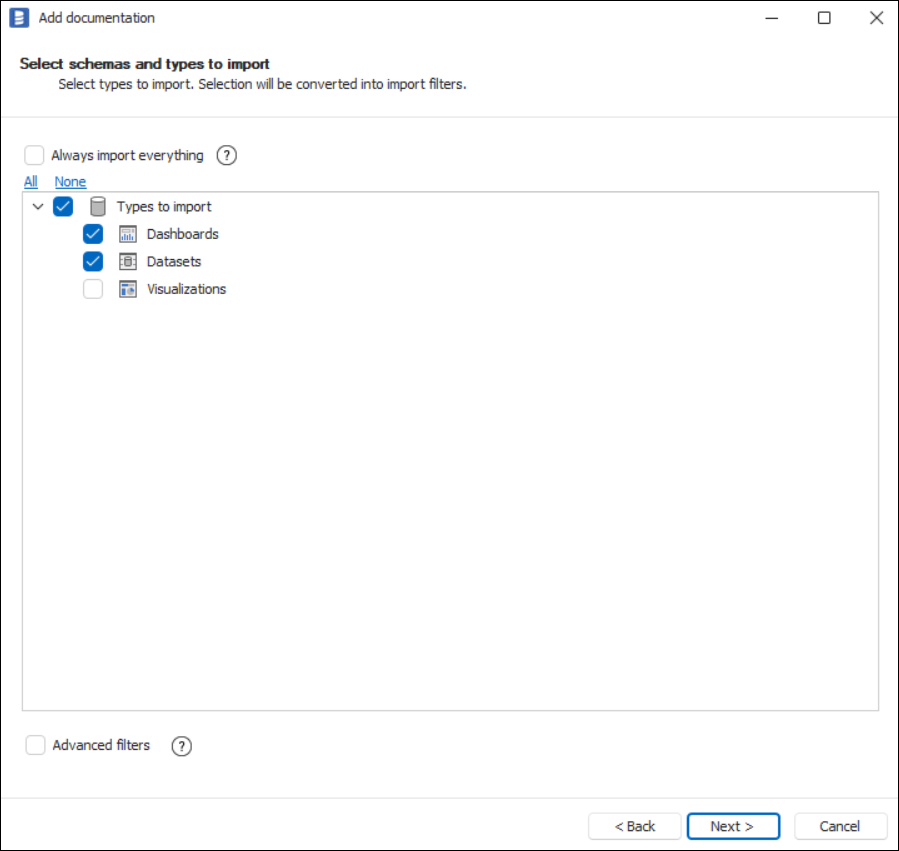
Confirm by clicking Next.
The next screen will allow you to change the default name of the documentation under which your schema will be visible in the Dataedo repository.
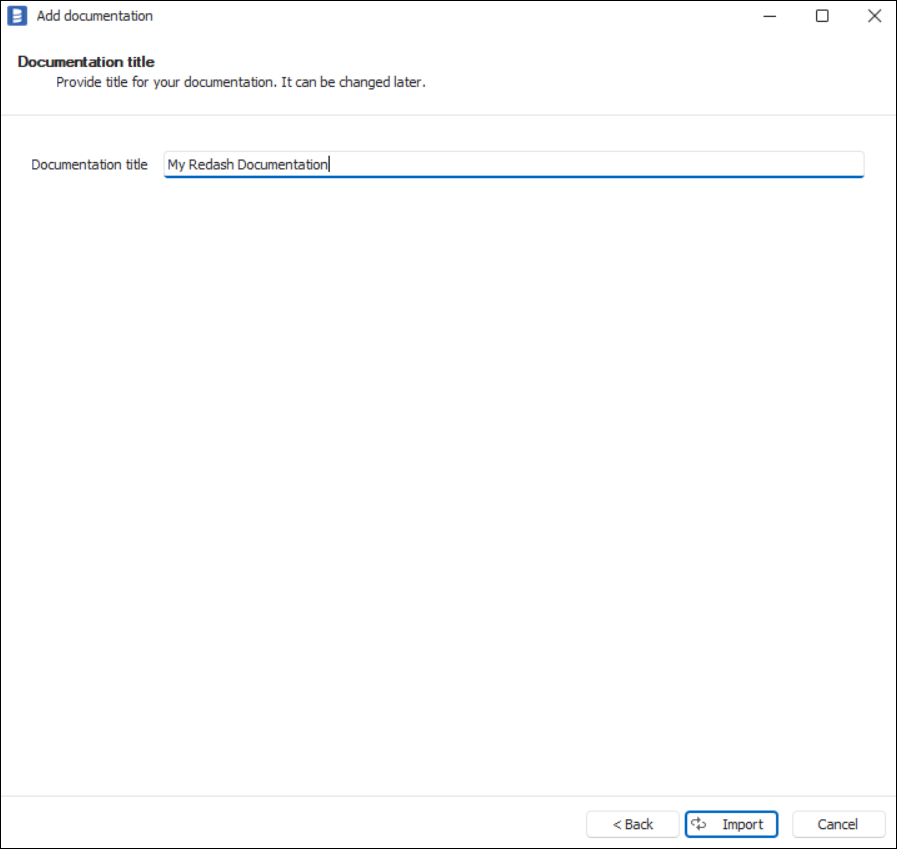
Click Import to start the import.
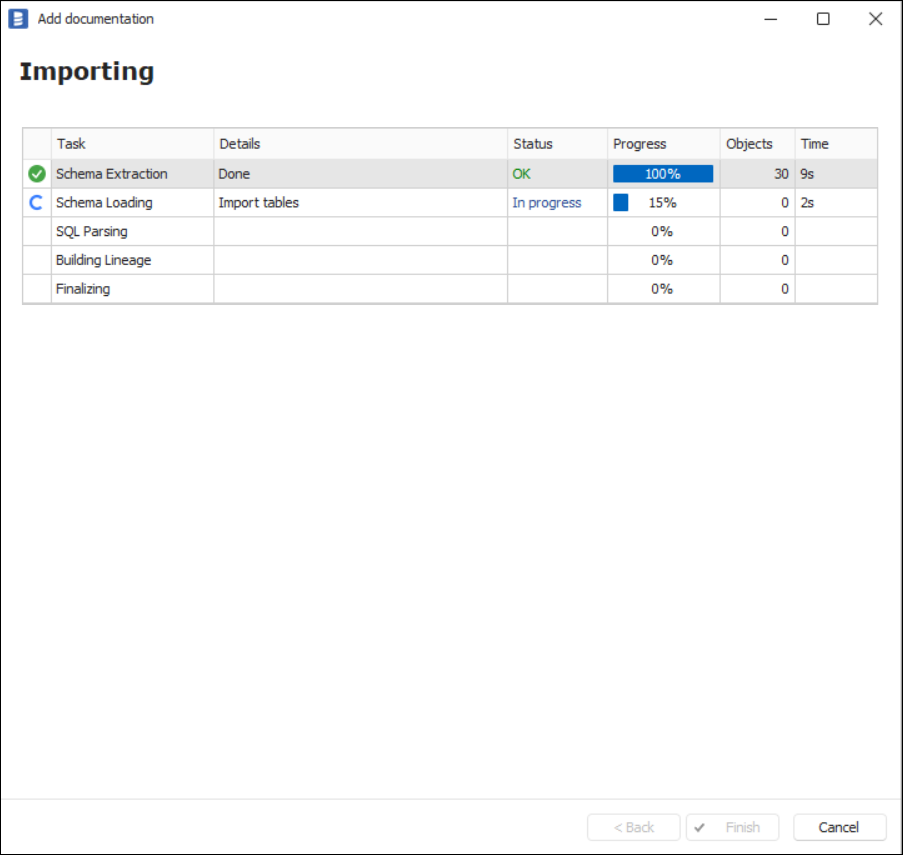
When done, close the import window with the Finish button.
Your Redash has been imported to new documentation in the repository.
Importing changes
To sync any changes in the schema in Redash and reimport any technical metadata, simply choose the Import changes option. You will be asked to connect to Redash again and changes will be synced from the source.
Scheduling imports
You can also schedule metadata updates using command line files. To do it, after creating documentation use the Save update command option. The downloaded file can be run in the command line, which will reimport changes to your documentation.

