Vertica Analytics Platform
Not supported: Data Quality, Foreign Key Testing, Extended Properties, Metadata Sync, Execution Flows
Supported versions
8, 9, 10
Supported schema elements and metadata
Dataedo reads the following metadata from Vertica Analytics Platform.
-
Tables
-
Columns
-
Data type with length
-
Nullable
-
Default value
-
-
Primary keys
- Columns
-
Unique indexes
- Columns
-
Foreign keys
- Columns
-
-
Views
-
Columns (see tables)
-
Script
-
-
Projections (displayed in the Views folder)
-
Columns (see tables)
-
Script
-
-
Procedures
-
Script (SQL procedures only)
-
Parameters
-
-
Functions
-
Script (SQL functions only)
-
Parameters
-
Returned value
-
Data profiling
Dataedo supports the following data profiling in Vertica:
-
Tables
- Rows count
-
Column distribution
-
Distinct values
-
Non-distinct values
-
Empty
-
NULL
-
-
Numeric columns profile
-
Minimum value
-
Maximum value
-
Average of values
-
Variance of values
-
Standard deviation
-
Span as difference between min and max value
-
Number of distinct values
-
-
String columns profile
-
Min value as first string in alphabetical order
-
Max value as last string in alphabetical order
-
Number of distinct values
-
-
Date columns profile
-
Min value as earliest date
-
Max value as latest date
-
Span as difference between min and max dates
-
Number of distinct dates
-
-
Top N values
-
Top 10/100/1000 popular values
-
All values if less than 1000 distinct
-
10 Random values
-
Read more about profiling in the Data Profiling documentation.
Importing Metadata in Dataedo Portal
Entry point
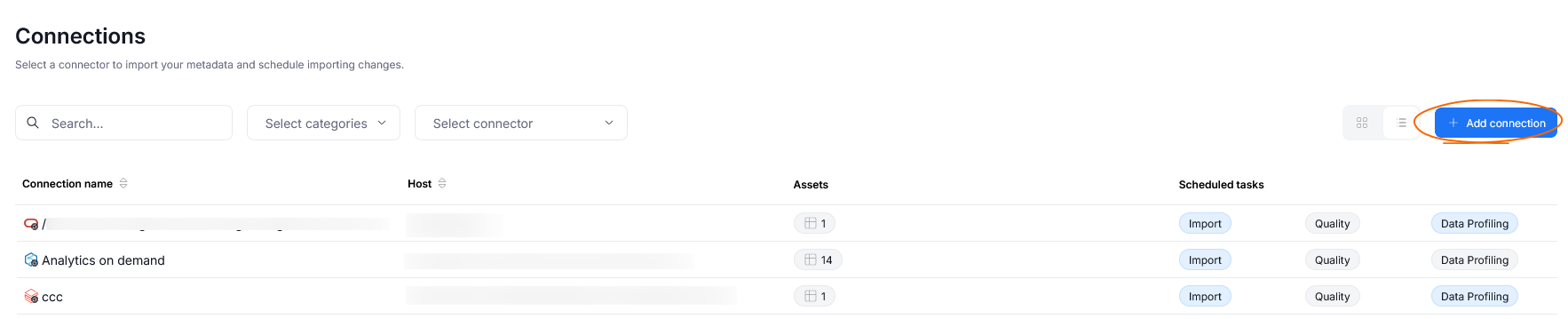
To start the Metadata Import flow, make sure you have the Connection Manager role. Go to Connections and click Add connection, then pick Vertica from the connector list to open the import wizard described in the following steps.
Step 1. Host details
Provide the name of the Connection, an optional description, and the details of the Vertica database:
- Host - the address of the Vertica server, for example
vertica-prod.company.internal. - Port - the Vertica port,
5433by default. - Database name - the database to import. The connector reads one database, so there is no separate step for picking data sources.
- Display name - the name under which the database will be visible in Dataedo. It defaults to
<database>@<host>.
A Connection in Dataedo represents a saved configuration for accessing a data source.
It can be reused for future imports and scheduling.
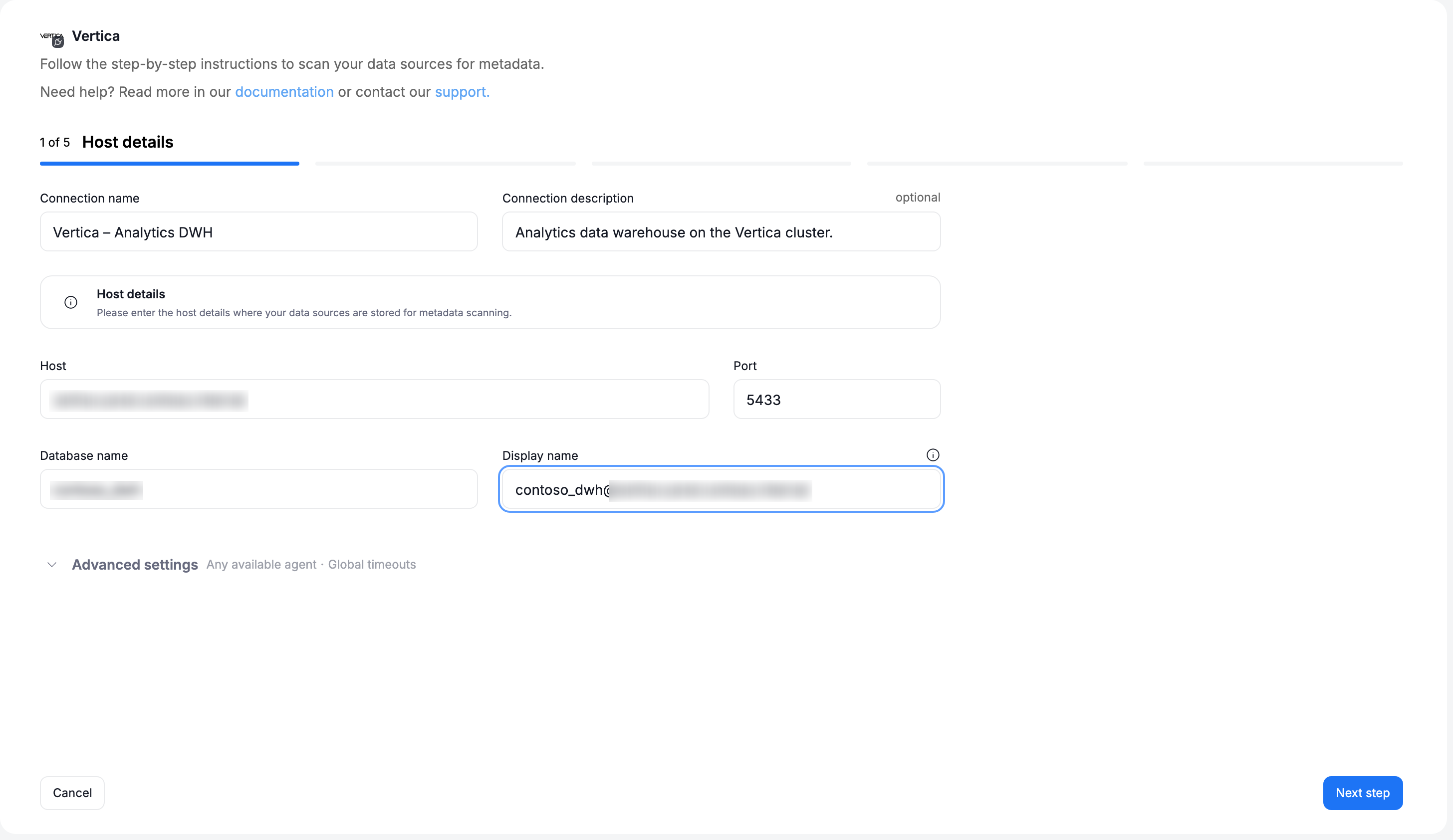
Advanced settings is optional — you can leave it collapsed and the connection will run on any available agent with the global timeouts. Expand it if you want to restrict the connection to a specific agent or override the task timeouts.
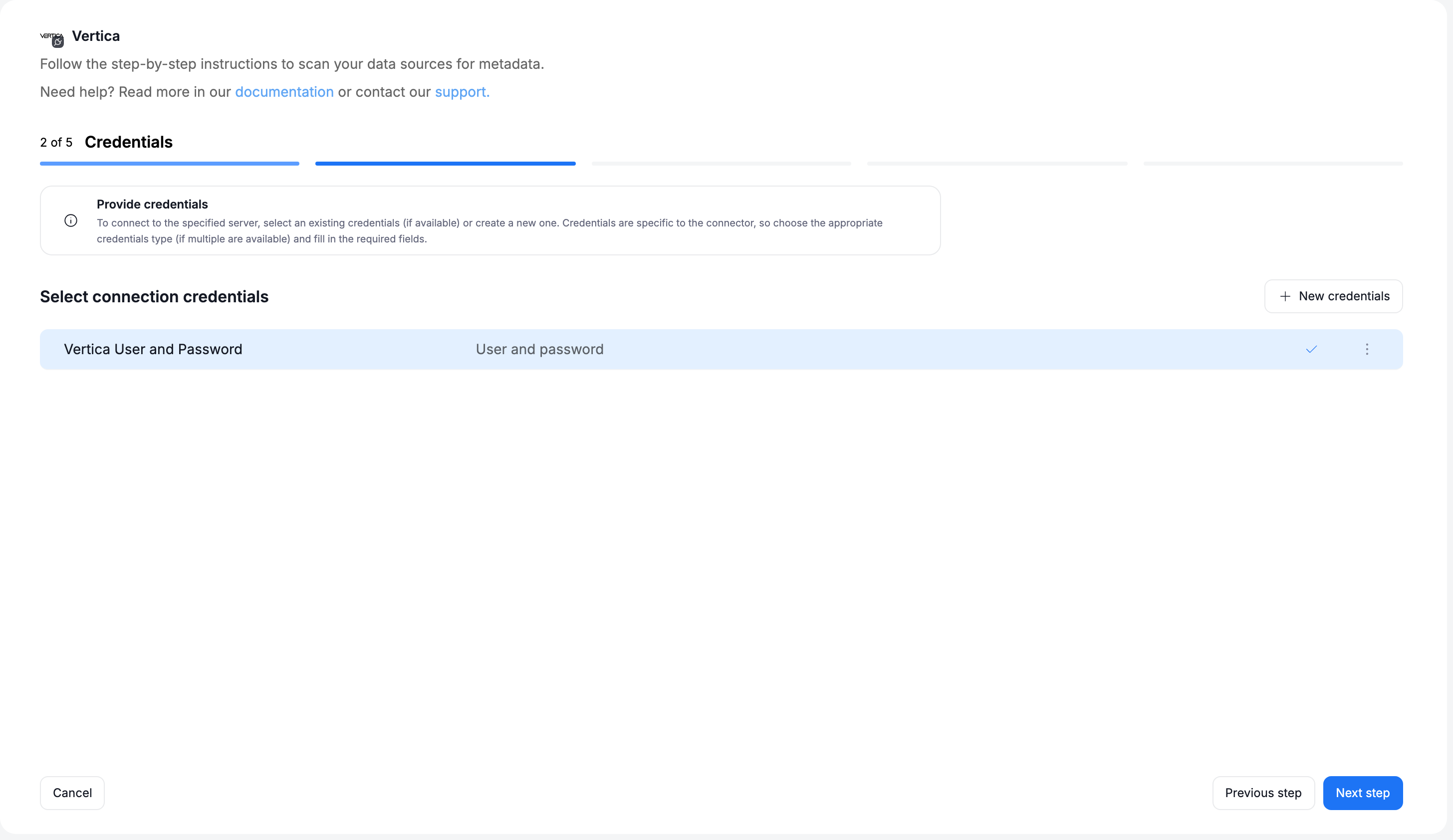
Step 2. Credentials
Choose credentials from the list of existing ones available for the selected connector, or add new credentials. Vertica uses a user and password pair.
Step 3. Objects to import
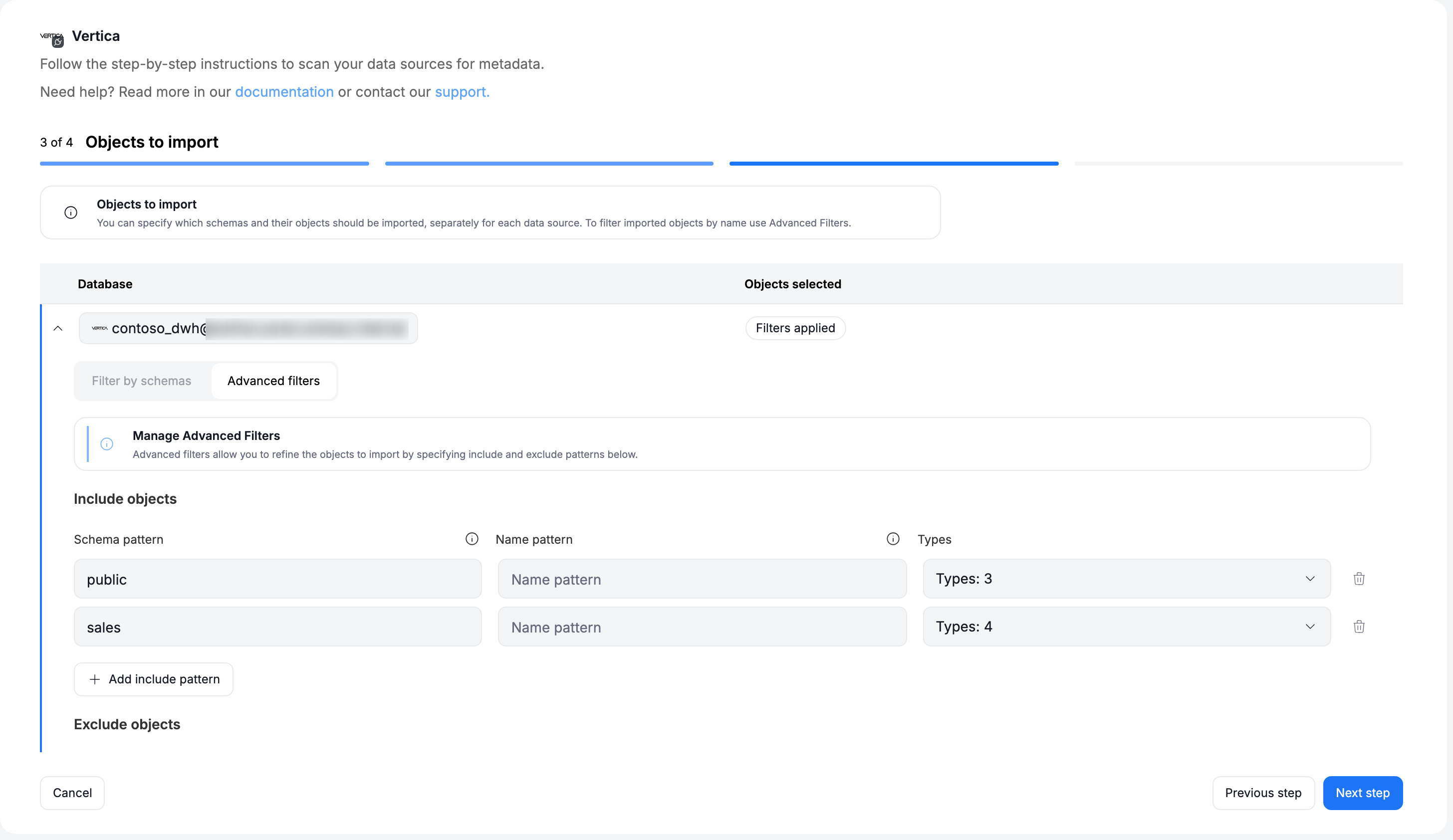
On the Filter by schemas tab, select the schemas to import and, within each schema, the object types: Tables, Views, Procedures, and Functions. Keep Future Schemas selected to also import schemas created after the connection is set up.
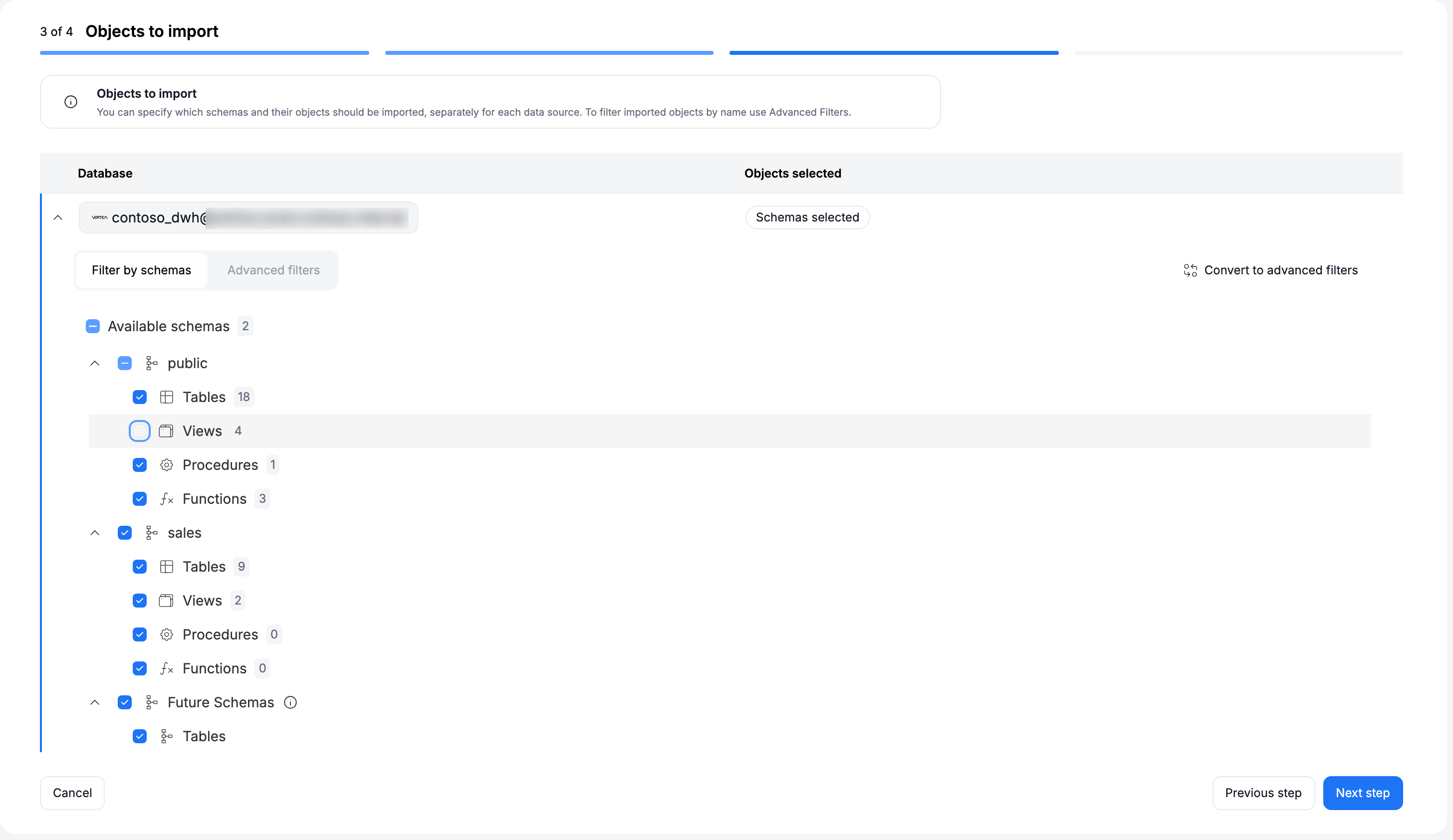
Use Advanced filters to include or exclude objects by schema pattern, name pattern, and object type.
Step 4. Schedule
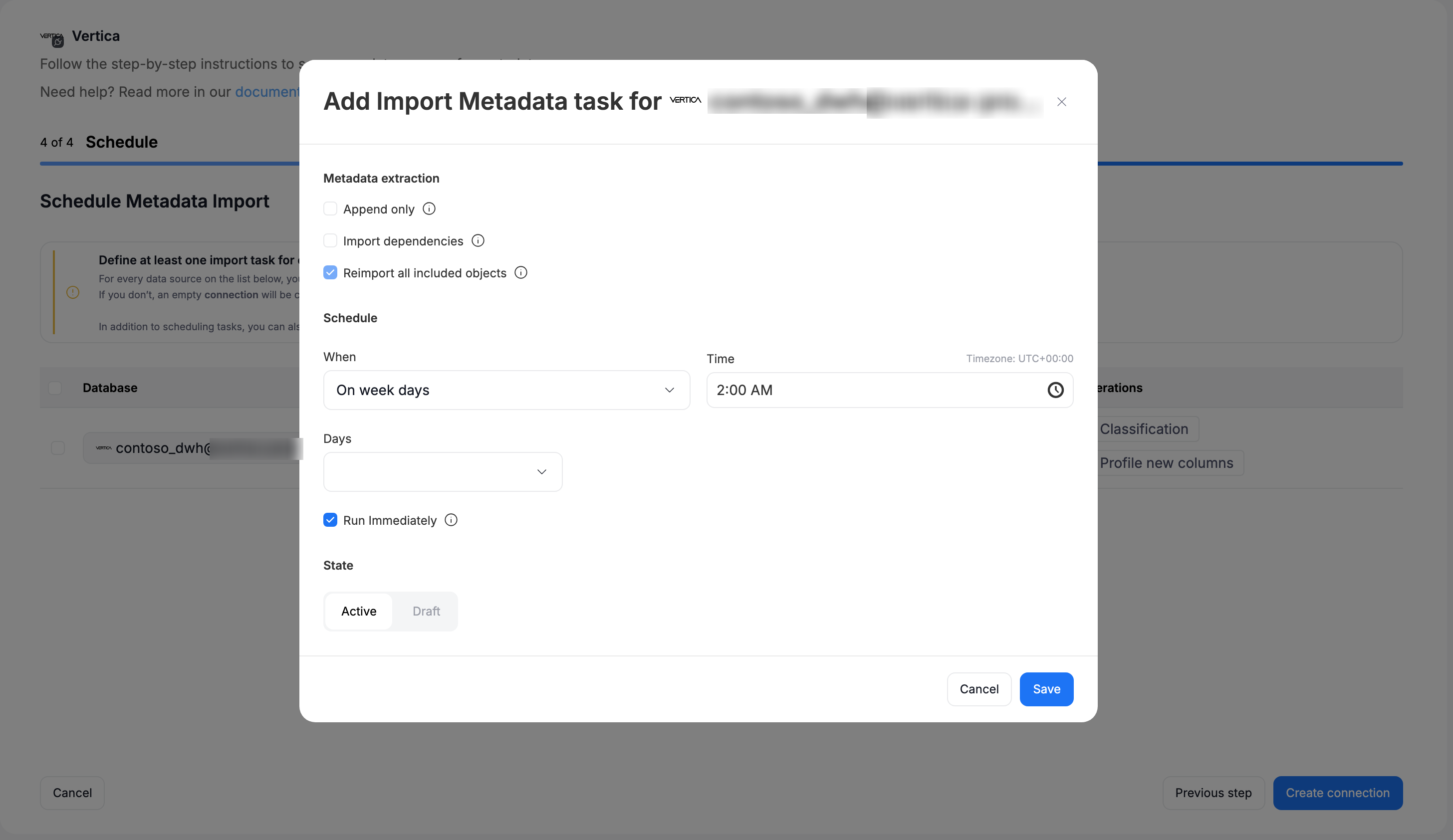
Besides Metadata import, you can also schedule a Data Profiling task for the database — see Data profiling for what it covers. To configure the Metadata Import task:
- choose the metadata extraction options (
Append only,Import dependencies,Reimport all included objects) - run daily, on selected weekdays, or on specific days of the month
- choose an exact time of execution
- Task state:
Active- the task will run as scheduledDraft- the task is saved but not executed until you switch it to Active
- Run Immediately - when checked, the task will also be executed right after you click
Create connection
Once saved, the task appears next to the database in the schedule list.
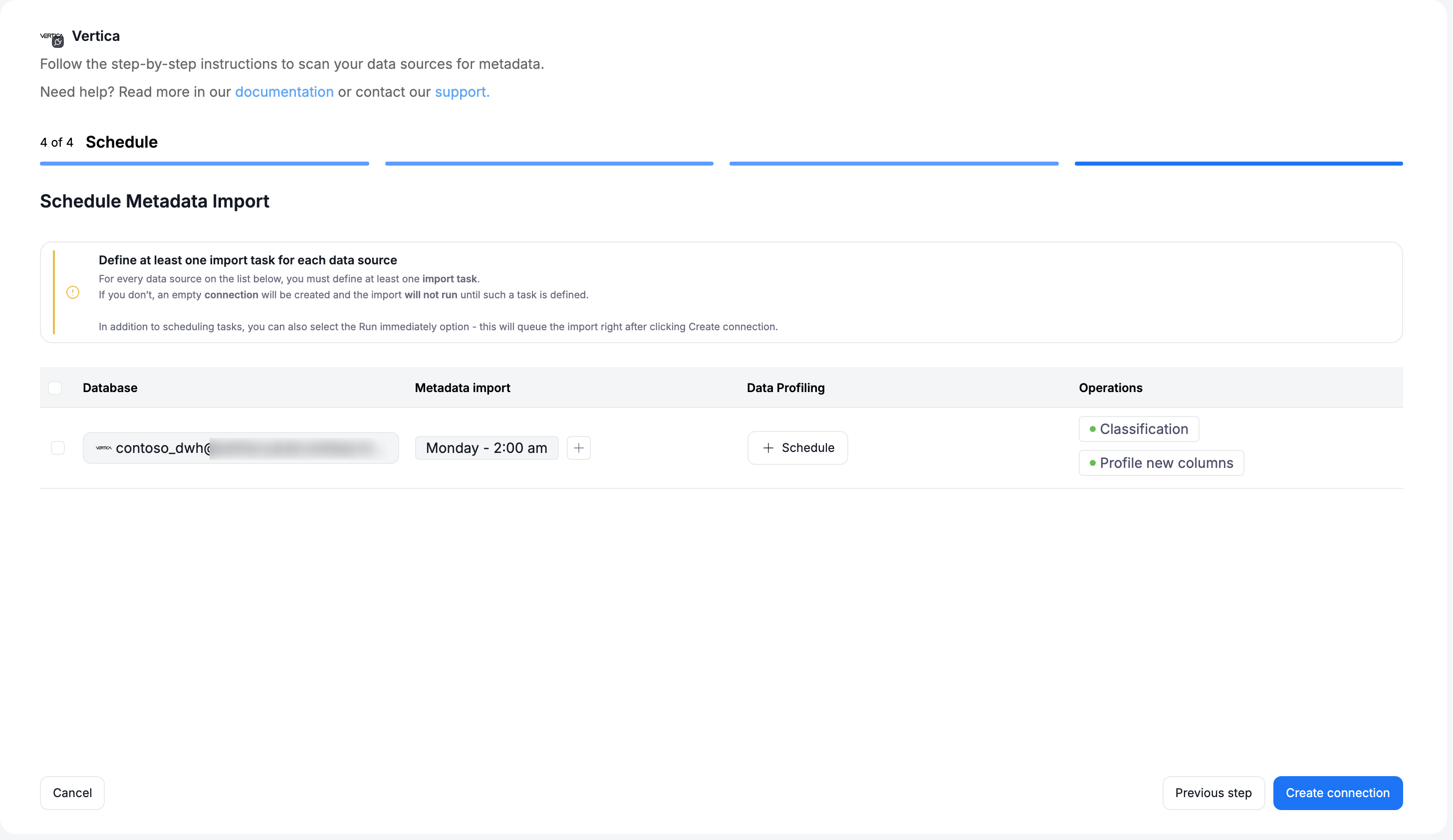
You must configure at least one import task for the data source.
If you skip this, an empty database will be created and no metadata will be imported.

