Connecting to Google BigQuery
This article explains how to connect Dataedo to Google BigQuery and import metadata - tables & columns.
Prerequisites
Service Account
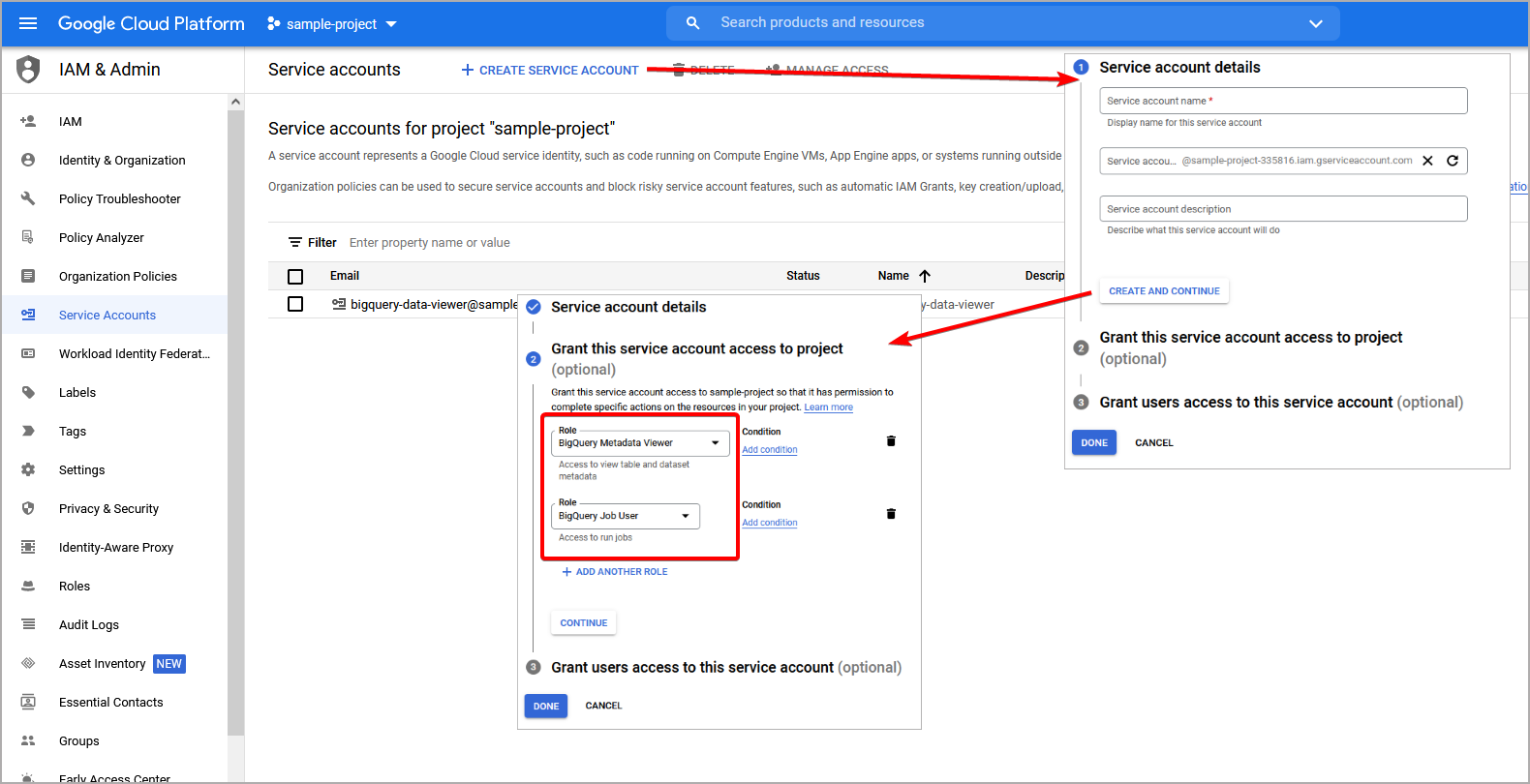
Dataedo connects to Google BigQuery with Service Account. If you don't have one, please read carefully the following Google Cloud docs:
During the creation (or modification) of the service account, you need to specify roles which will allow Dataedo to document the BigQuery database. Dataedo reads INFORMATION_SCHEMA views to collect metadata, hence minimum permissions (roles) that the service account needs to have are:
- BigQuery Metadata Viewer - to read metadata,
- BigQuery Job User - to run a query that reads metadata.
Service account key
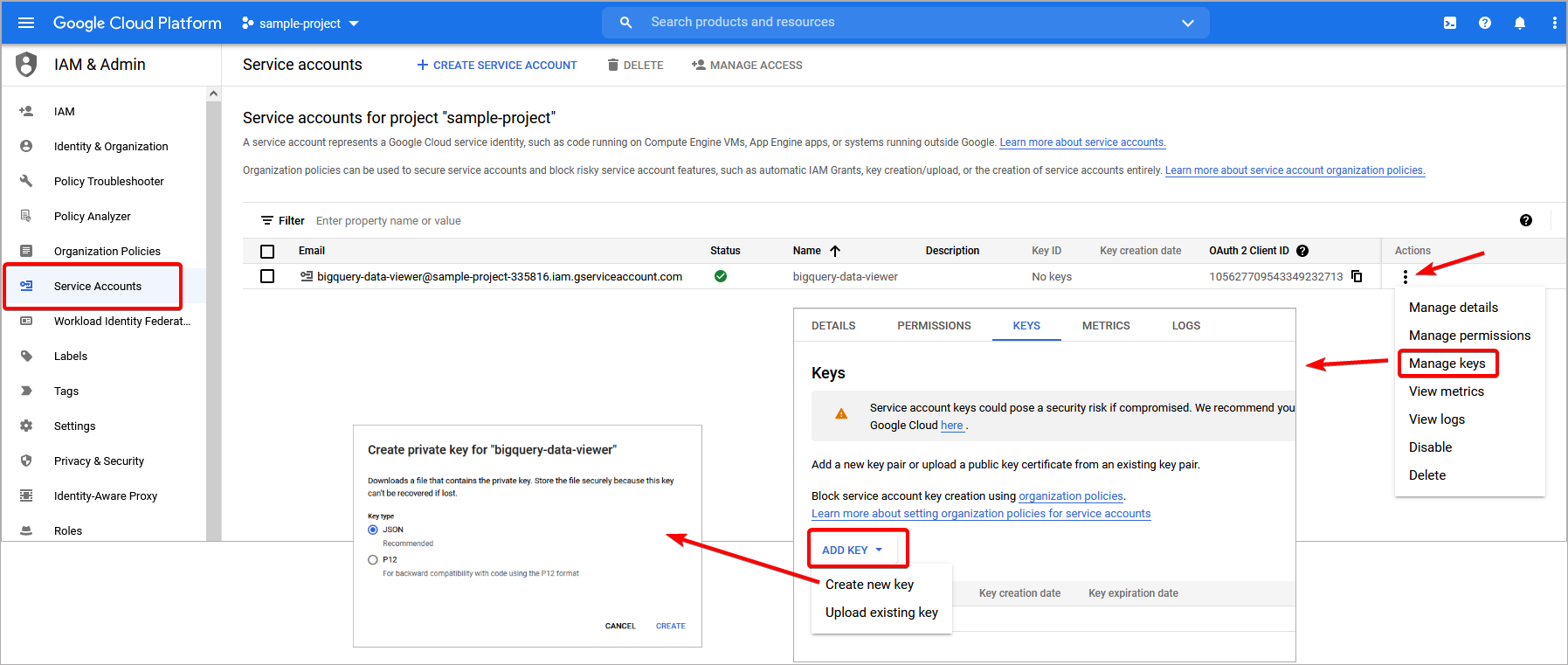
To authenticate to Google BigQuery with a service account, you need a Service Account Key. To get one, you need to find the Service Account resource, open the Service Account that will be used to connect from Dataedo, go to the Keys tab and click Add Key -> Create new Key button. Then select JSON format and download the key.
Cloud Resource Manager API
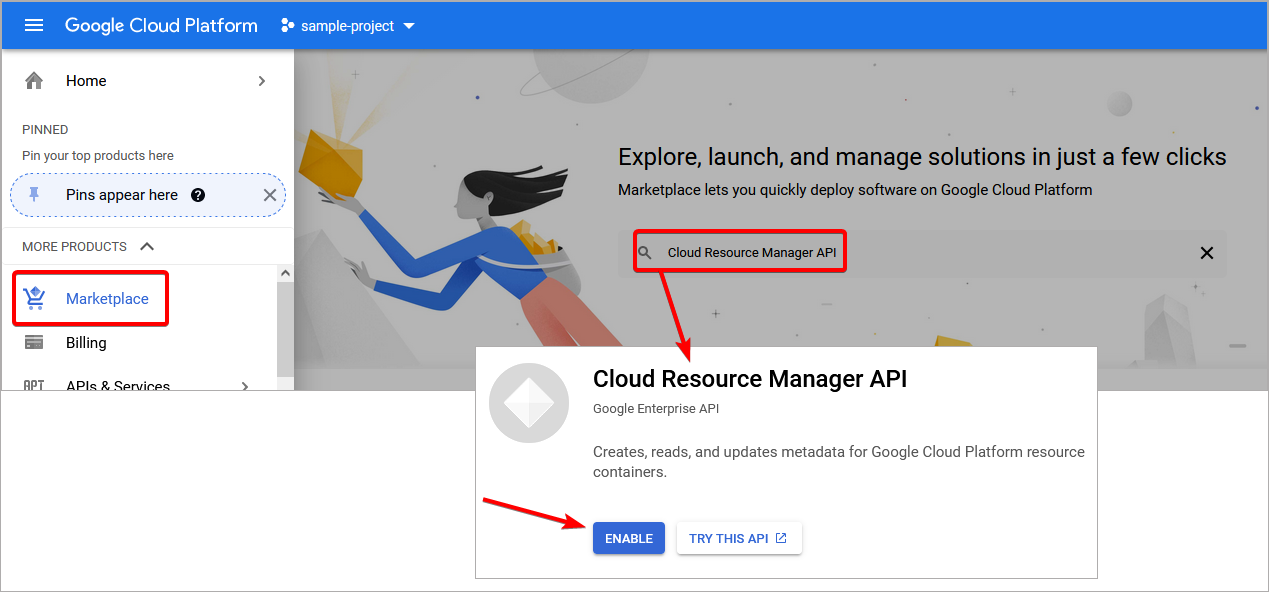
In order to document the BigQuery database, Dataedo needs to access the Cloud Resource Manager API which needs to be enabled first. Most likely this feature will be enabled, however, if it is disabled, you can activate it by searching Cloud Resource Manager API in Google Marketplace and then clicking the Enable button.
Importing Metadata in Dataedo Portal
Entry point
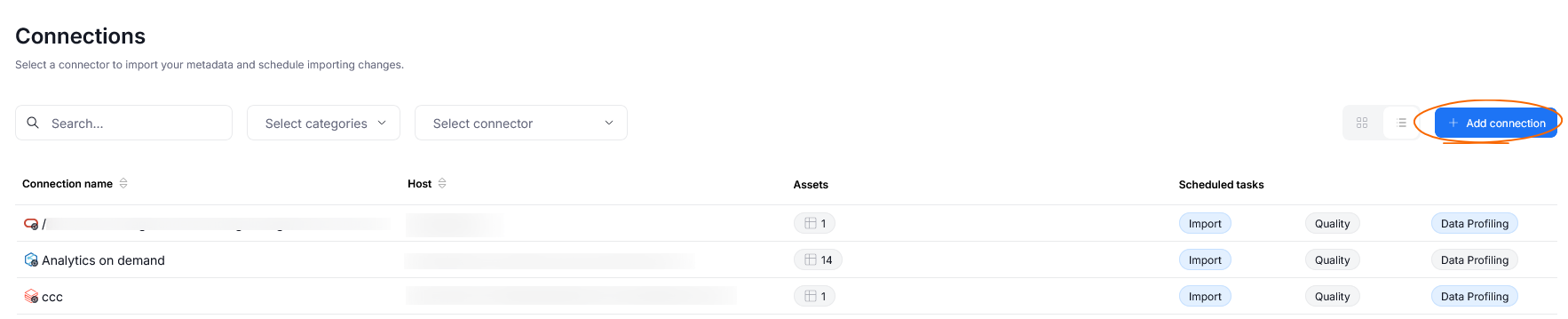
To start the Metadata Import flow, make sure you have the Connection Manager role. Go to Connections and click Add connection, then pick Google BigQuery from the connector list to open the import wizard described in the following steps.
Step 1. Host details
Provide the name of the Connection, an optional description, and the Project - the ID of the Google Cloud project under which your BigQuery datasets were created, for example company-analytics.
A Connection in Dataedo represents a saved configuration for accessing a data source.
It can be reused for future imports and scheduling.
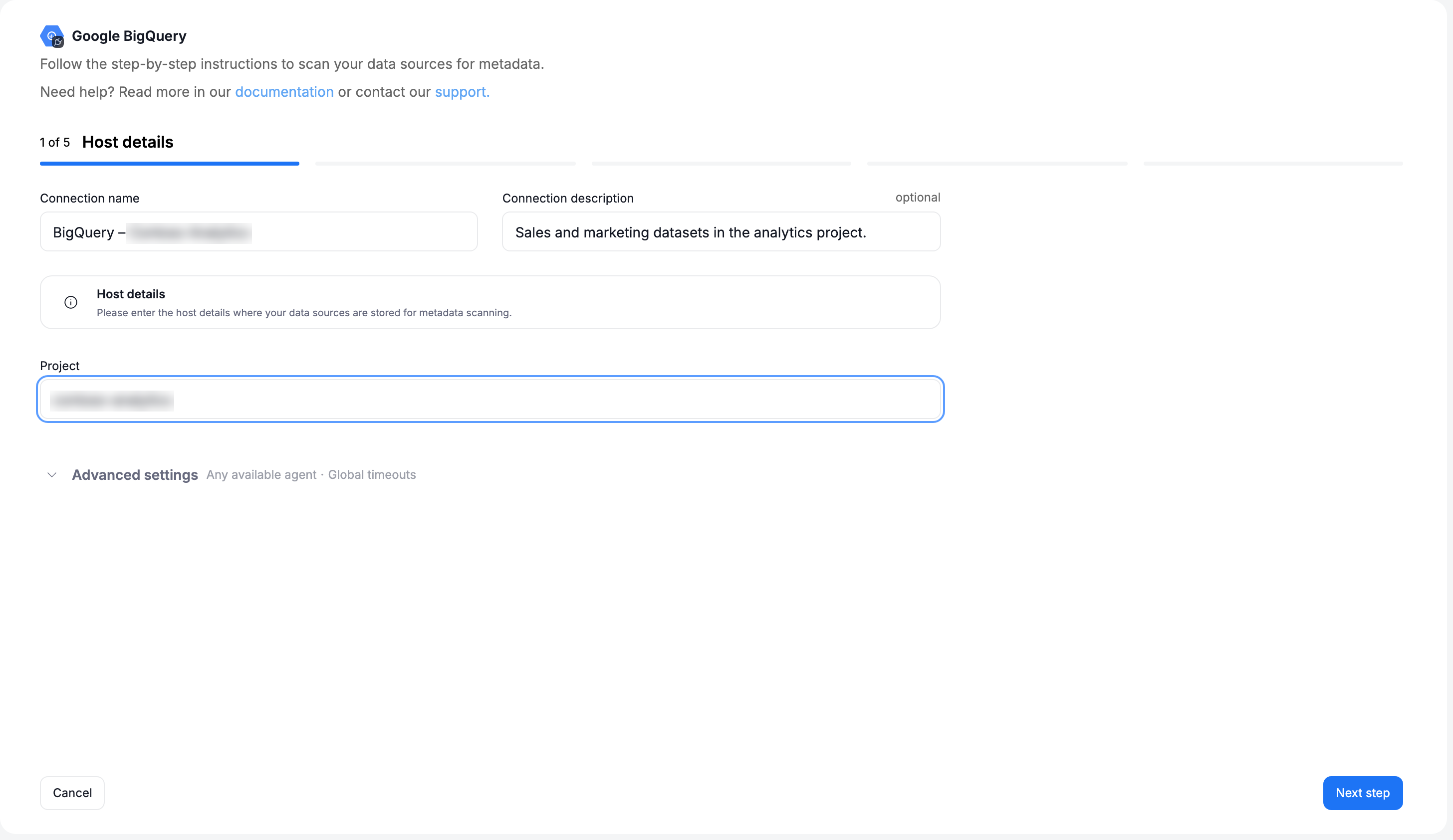
Advanced settings is optional — you can leave it collapsed and the connection will run on any available agent with the global timeouts. Expand it if you want to restrict the connection to a specific agent or override the task timeouts.
Step 2. Credentials
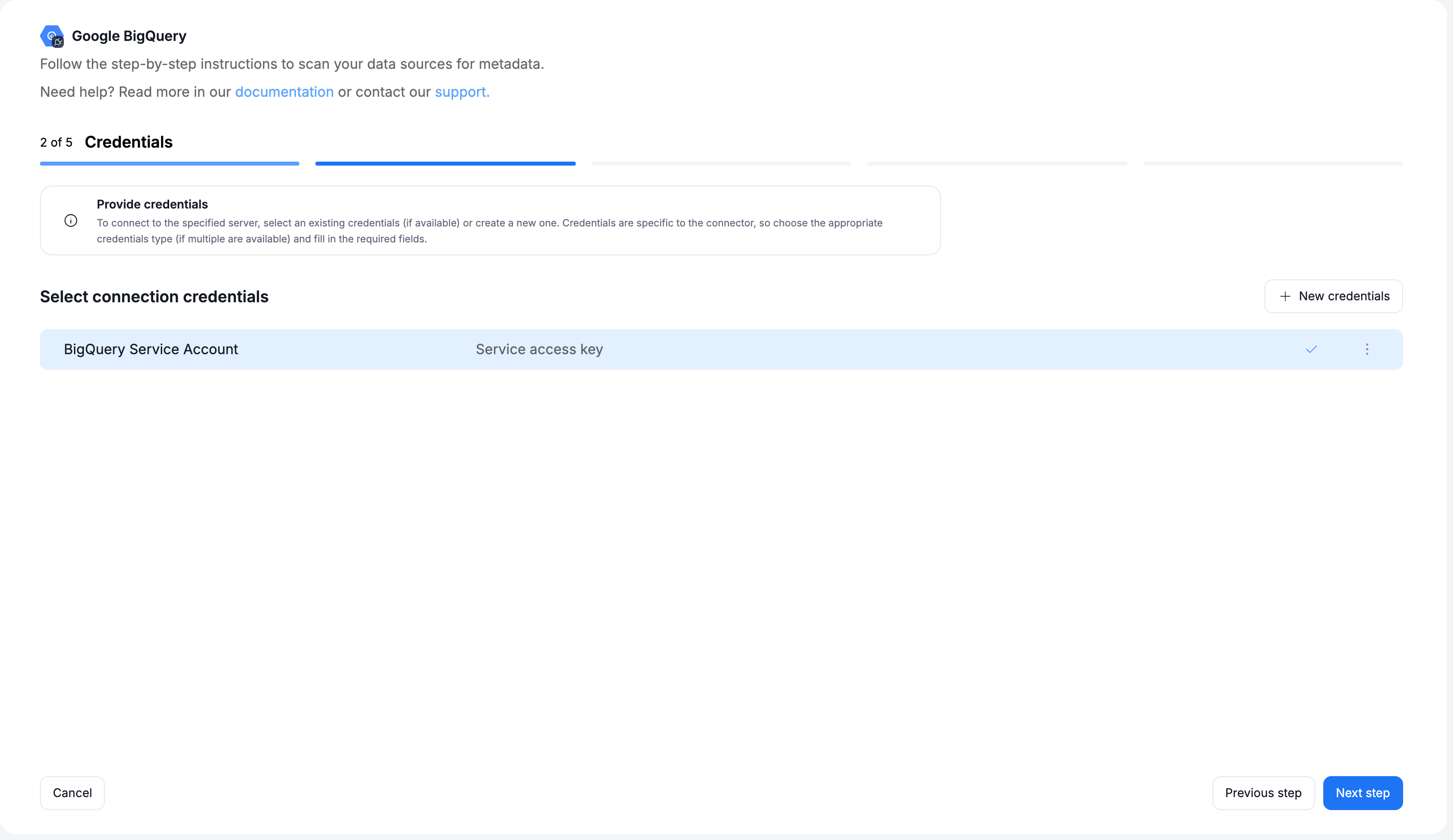
Choose credentials from the list of existing ones available for the selected connector, or add new credentials. Google BigQuery uses a Service access key - the JSON key described in Service account key.
Step 3. Data Sources
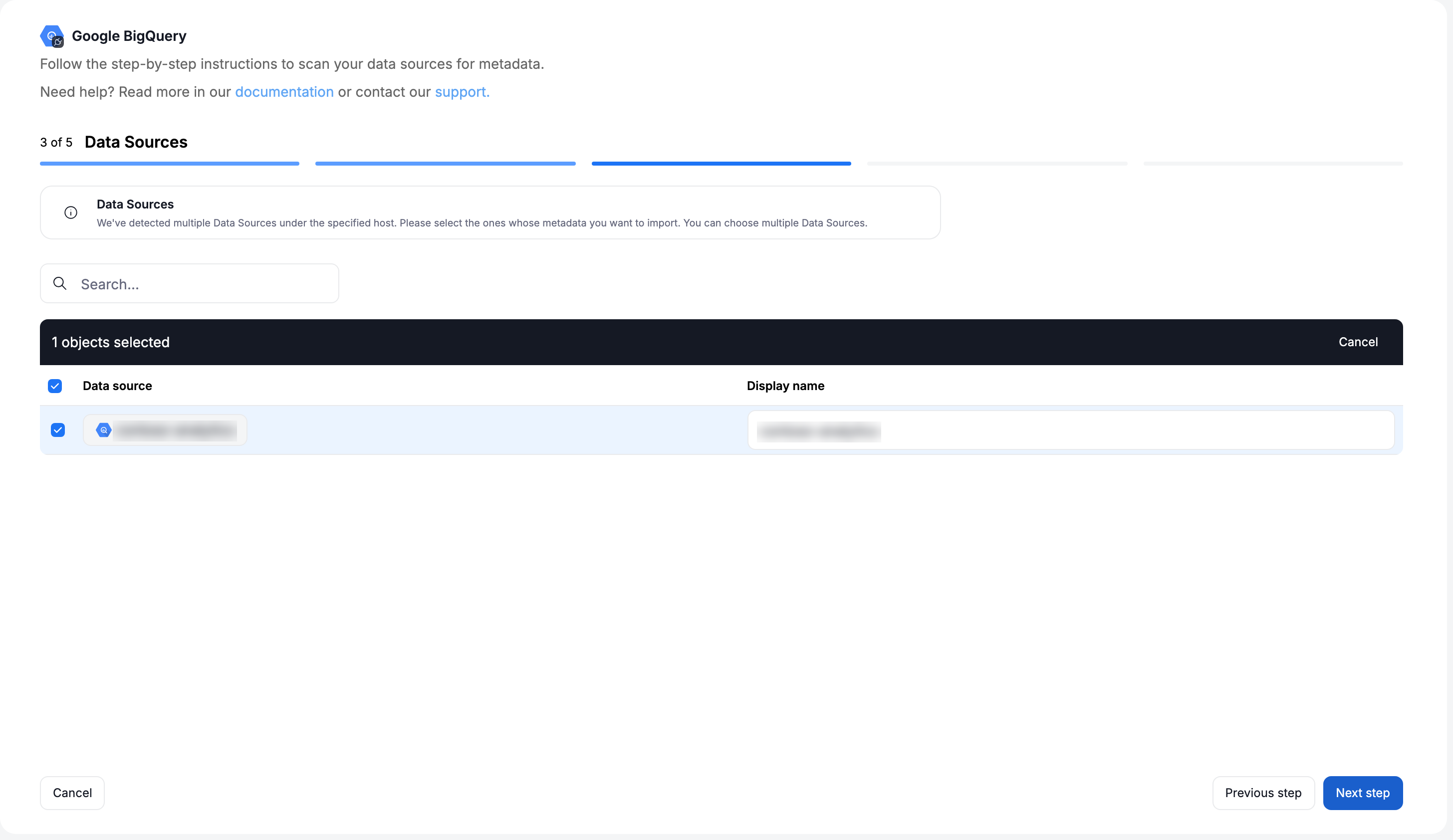
During one import you can read the metadata of up to 20 data sources. You can reuse the same connection to import more sources later.
- Portal displays the data sources found for the project - in the example, the
company-analyticsproject itself - You can use the search box to narrow down results.
- each selected data source should be given a Display name, which will be visible in Dataedo
Step 4. Objects to import
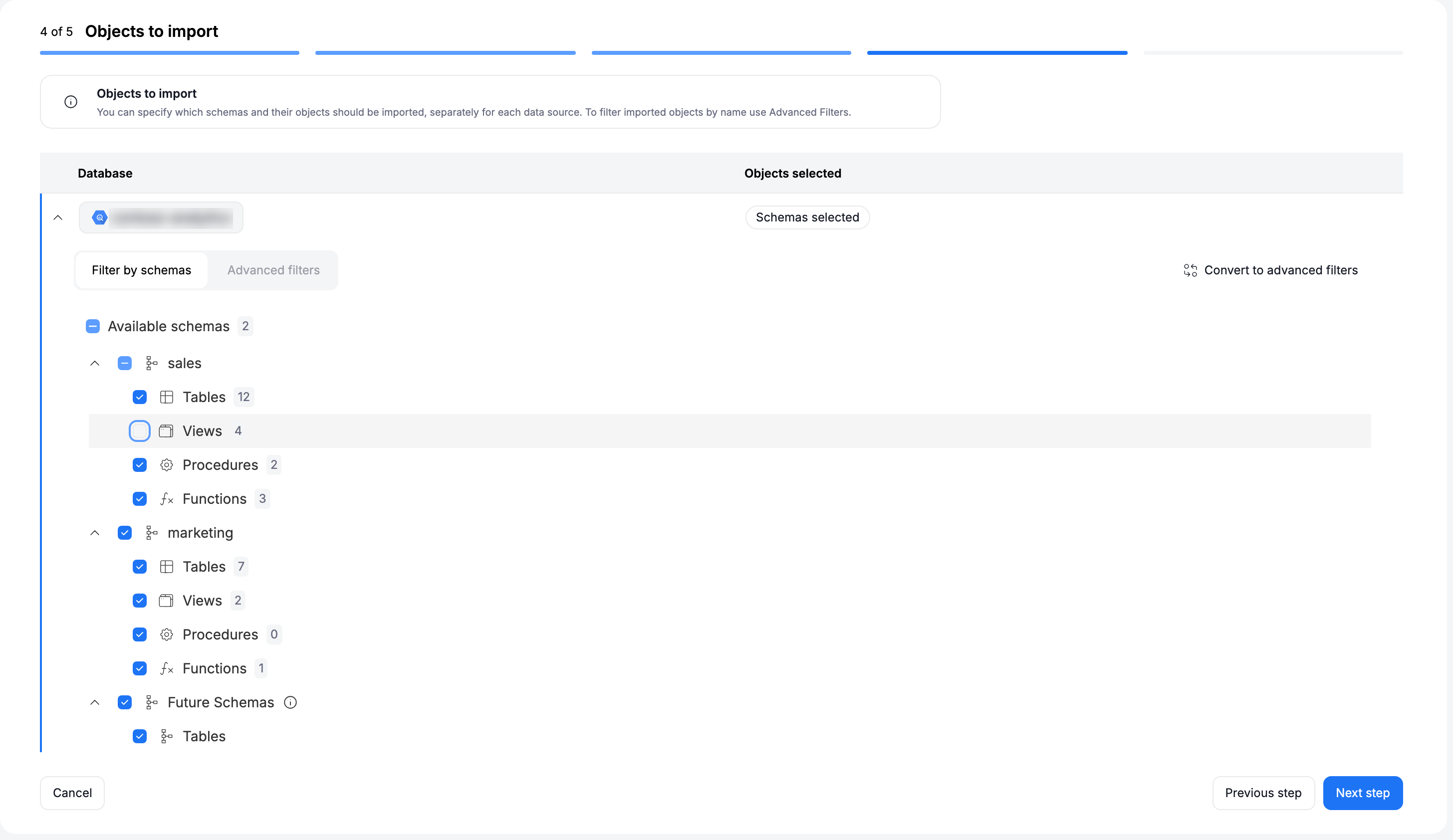
On the Filter by schemas tab, select the datasets to import - they are listed as schemas - and, within each dataset, the object types: Tables, Views, Procedures, and Functions. Keep Future Schemas selected to also import datasets created after the connection is set up.
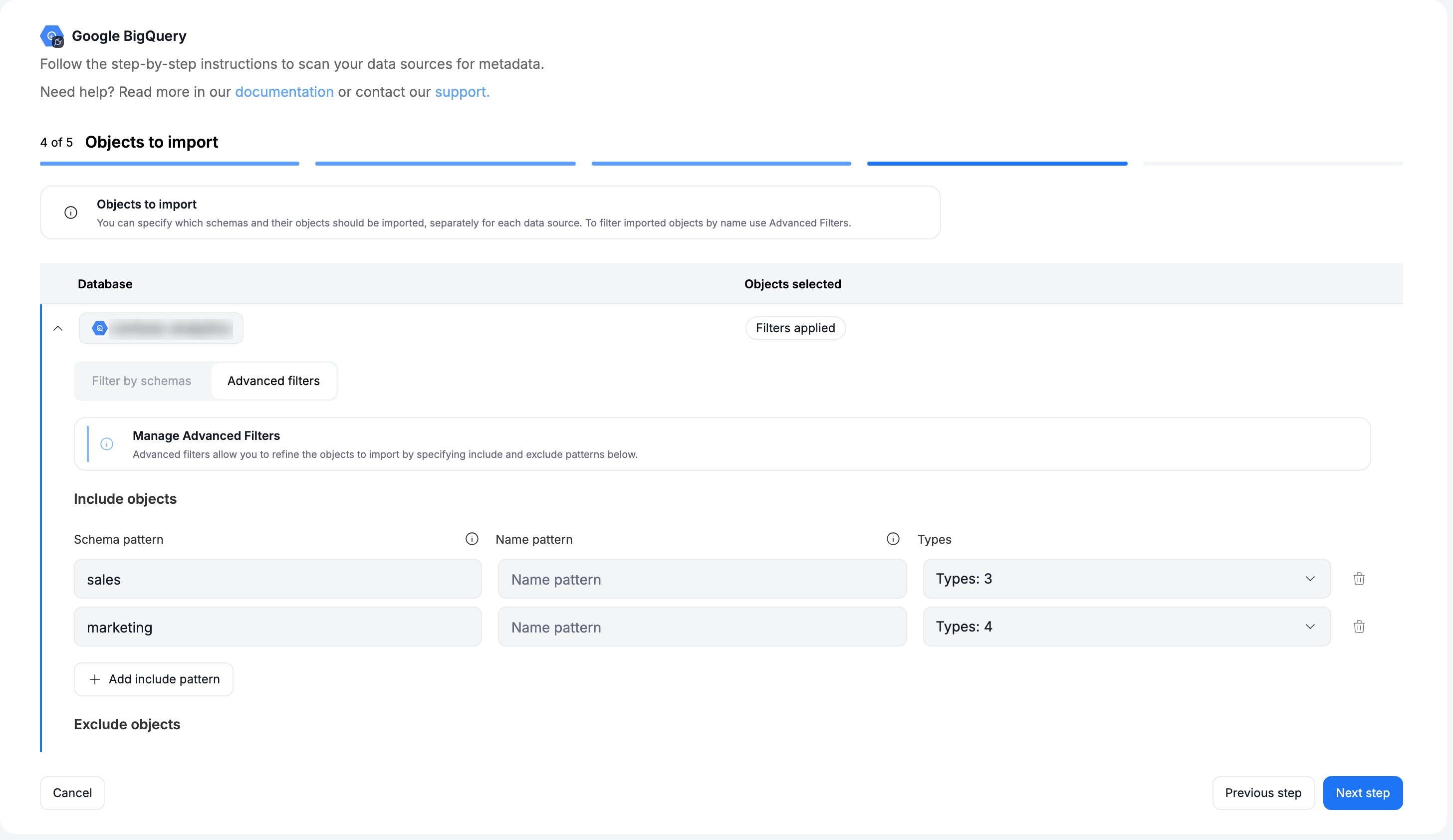
Use Advanced filters to include or exclude objects by schema pattern, name pattern, and object type.
Step 5. Schedule
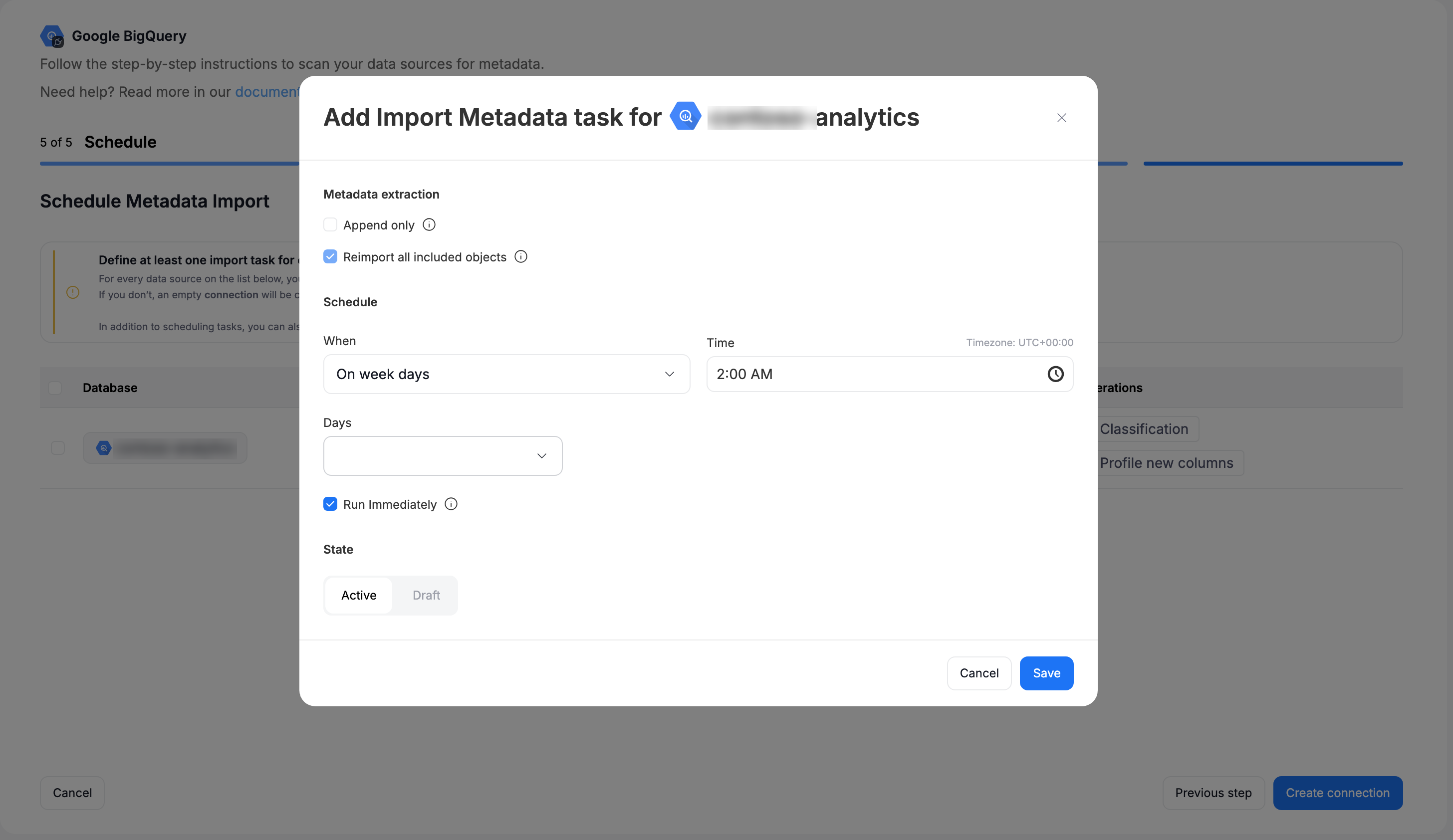
Besides Metadata Import, you can also schedule a Data Profiling task. To configure the Metadata Import task:
- choose the metadata extraction options (
Append only,Reimport all included objects) - run daily, on selected weekdays, or on specific days of the month
- choose an exact time of execution
- Task state:
Active- the task will run as scheduledDraft- the task is saved but not executed until you switch it to Active
- Run Immediately - when checked, the task will also be executed right after you click
Create connection
Only one source in a metadata import can have Run Immediately selected.
Once saved, the task appears next to its data source in the schedule list.
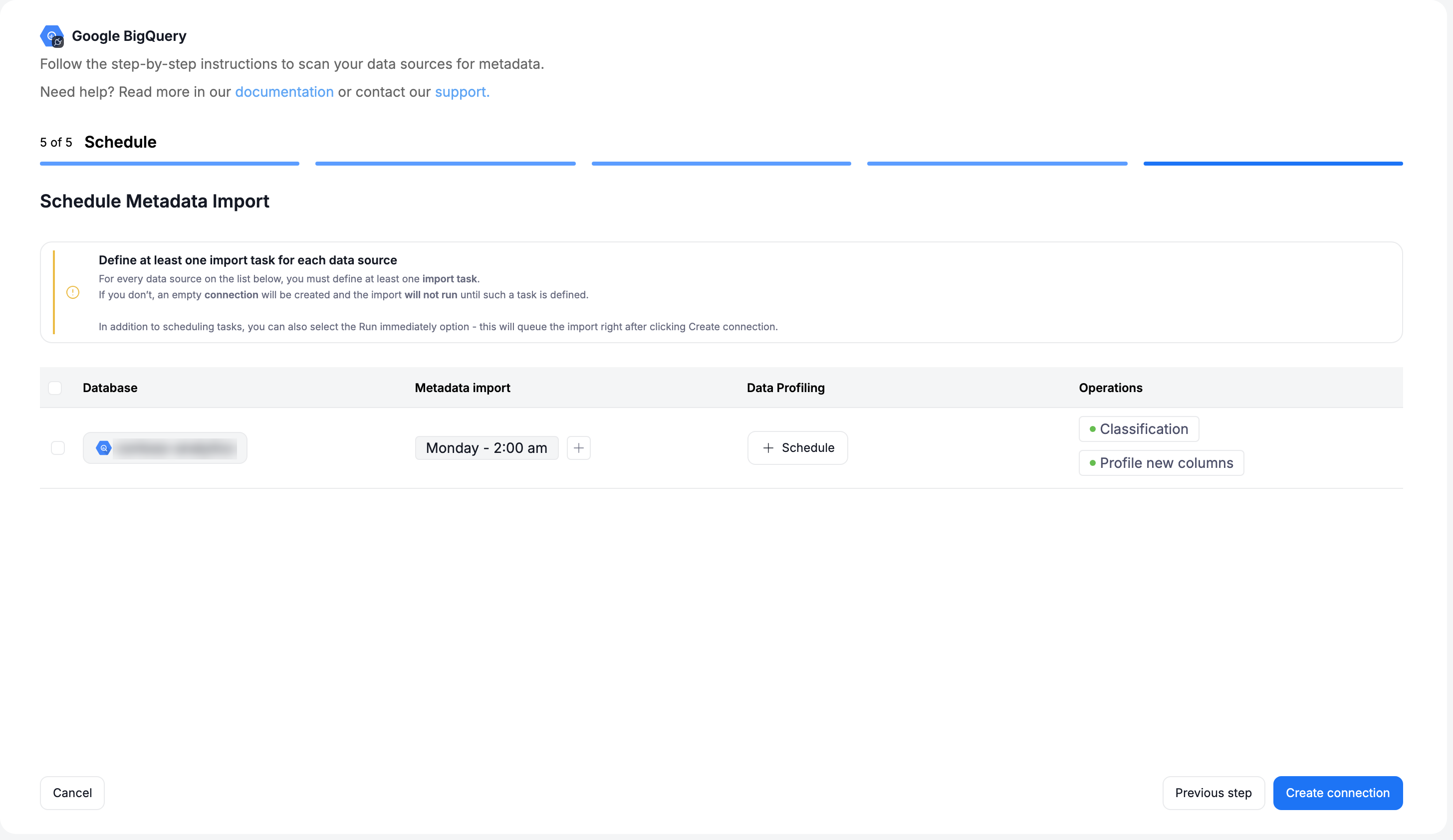
You must configure at least one import task for every data source.
If you skip this, an empty database will be created and no metadata will be imported.
Importing Metadata in Dataedo Desktop
Add new connection
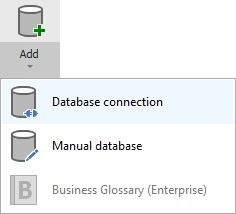
To connect to Google BigQuery create new documentation by clicking Add documentation and choosing Database connection.
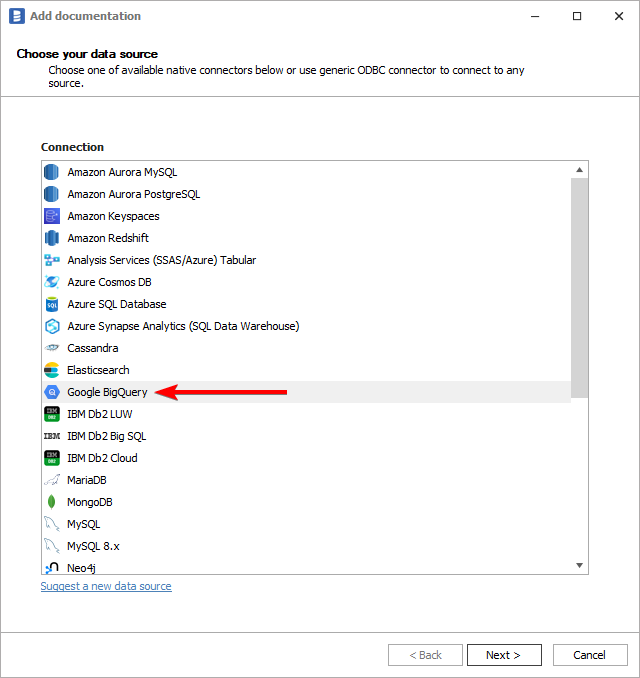
On the Add documentation window choose Google BigQuery:
Connection details
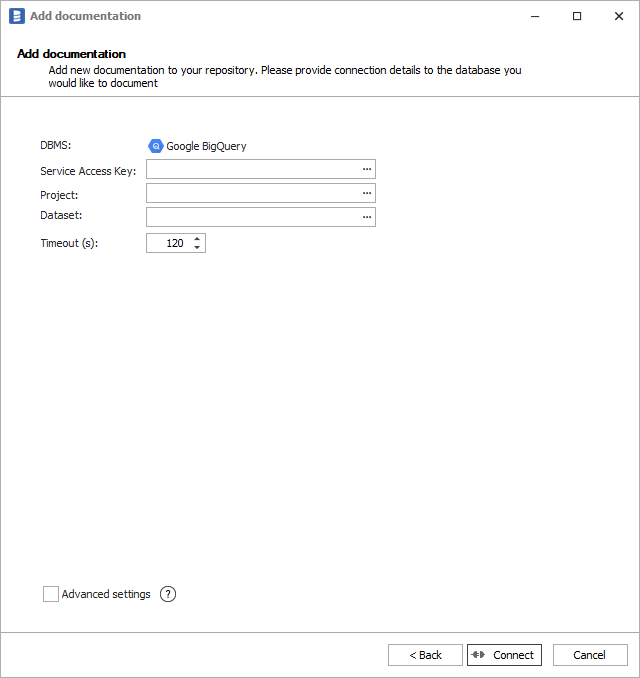
Provide connection details:
- Service Access Key - path to Service Account Key. You can open file explorer to browse for the file by clicking the [...] button,
- Project - select the Google Cloud project under which your BigQuery database was created. You can expand the list of available projects by clicking the [...] button,
- Dataset - select one or more datasets to document. You can expand the list of datasets by clicking the [...] button.
Importing metadata
When the connection is successful, Dataedo will read objects and show a list of objects found. You can choose which objects to import. You can also use advanced filter to narrow down the list of objects.
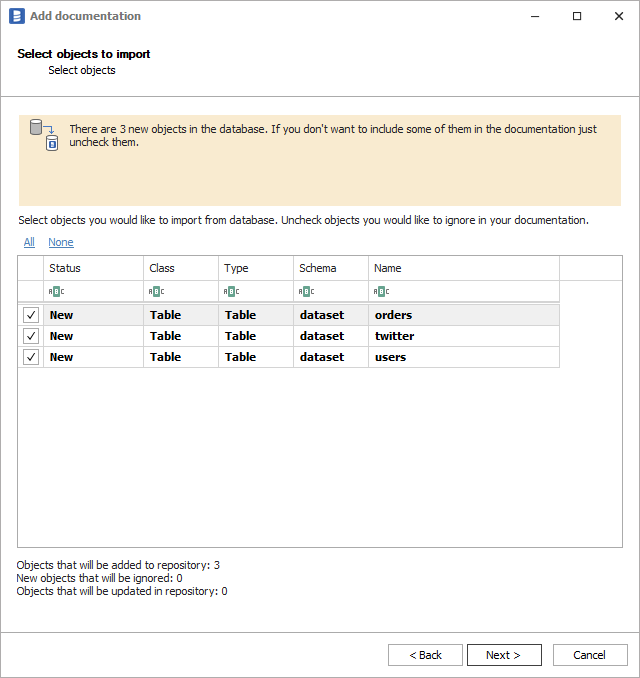
Confirm the list of objects to import by clicking Next.
The next screen allows you to change the default name of the documentation under which it will be visible in the Dataedo repository.
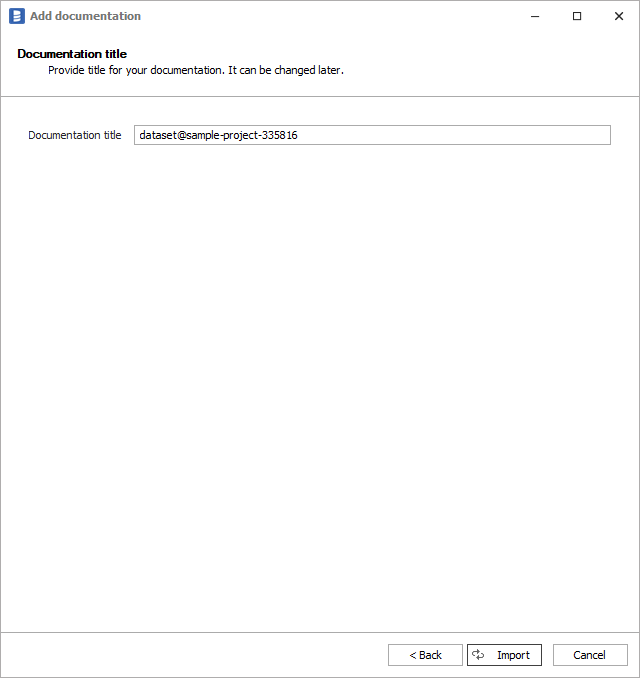
Click Import to start the import.
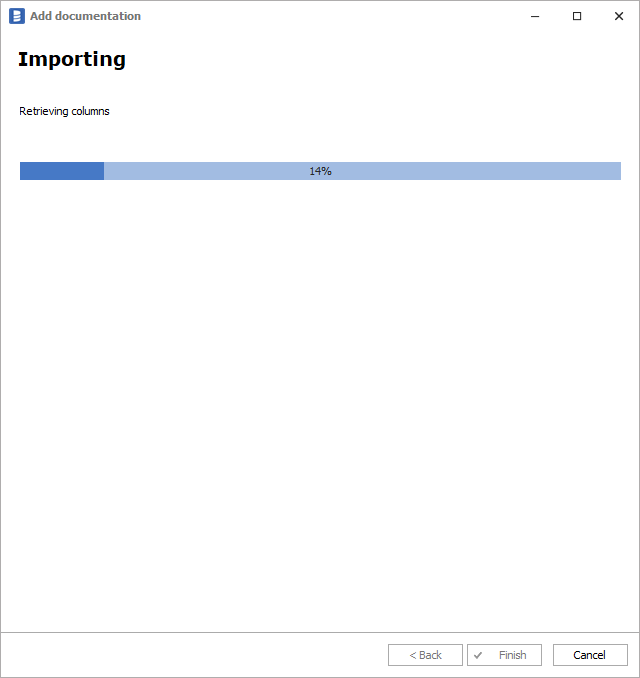
When done, close the import window with the Finish button.
Outcome
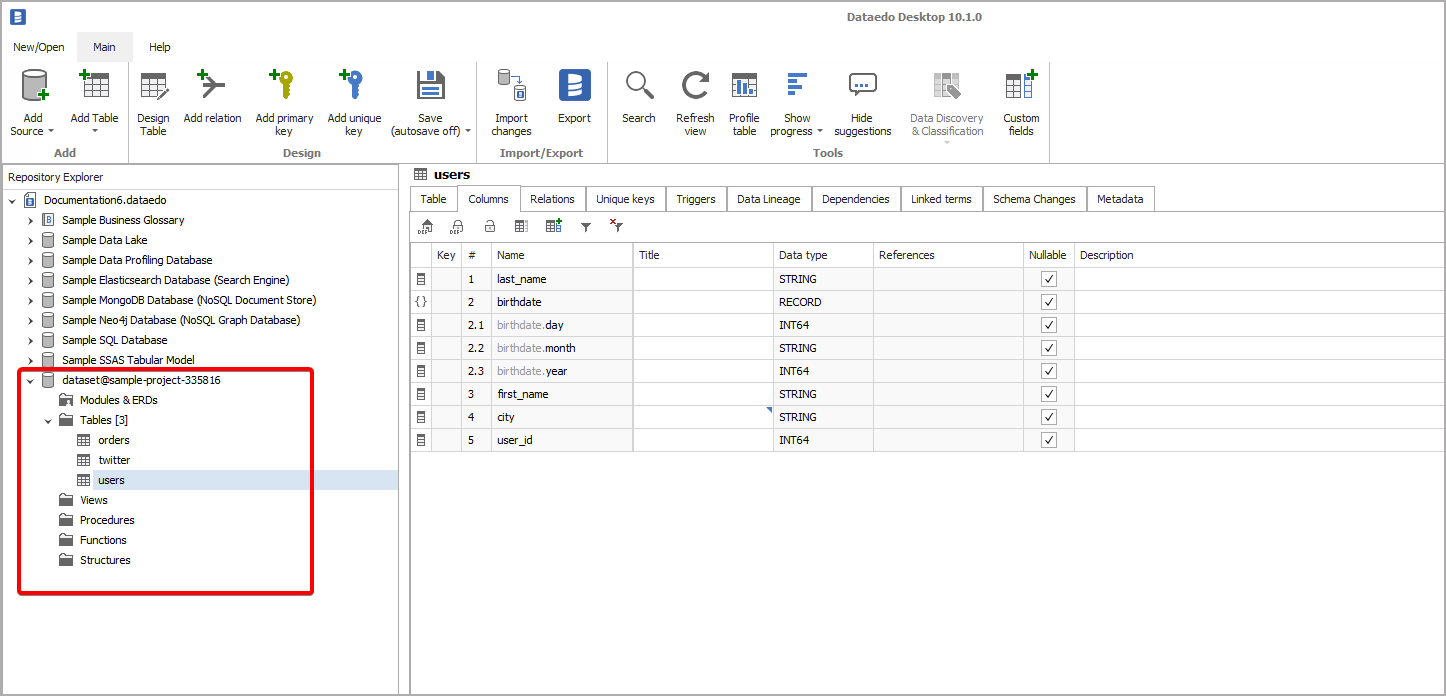
Your database schema has been imported to new documentation in the repository.