Microsoft Dynamics 365 with Dataverse
Connector features
Data catalog
Dataedo documents metadata of the following objects:
- Tables
- Views
- Forms (from Dynamics 365 Marketing/Customer Insights)
Data lineage
For Dynamics 365 Dataedo supports both manual and automatic lineage. Automatic lineage is available for views. Dataedo will parse views and show the source of each of the columns.
Data profiling
Dataedo does not support profiling for Dynamics 365.
Unique keys
Dataedo marks columns as unique keys when data type equals UniqueIdentifier or column has defined alternate key on it.
Importing Metadata in Dataedo Portal
Entry point
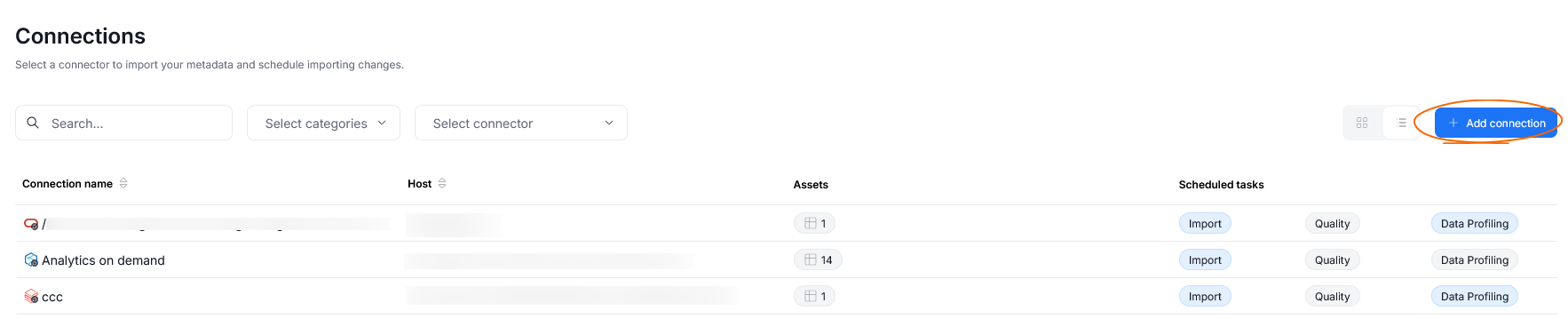
To start the Metadata Import flow, make sure you have the Connection Manager role. Go to Connections and click Add connection, then pick Microsoft Dynamics 365 with Dataverse from the connector list to open the import wizard described in the following steps.
Step 1. Host details
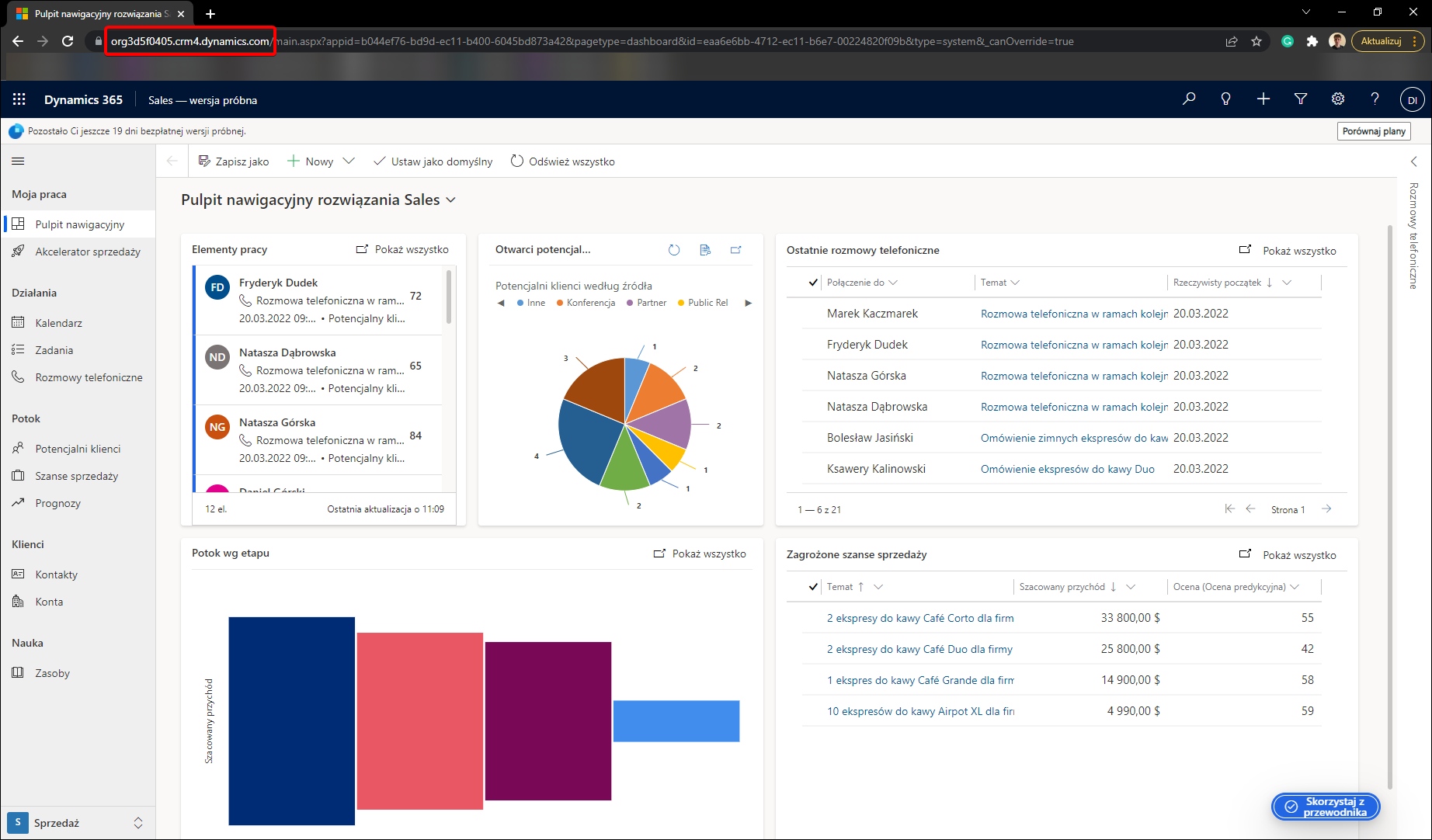
Provide the name of the Connection, an optional description, and the Environment URL - the address of your Dataverse instance, for example https://org1a2b3c4d.crm4.dynamics.com. See How to get Environment URL below for where to find it.
A Connection in Dataedo represents a saved configuration for accessing a data source.
It can be reused for future imports and scheduling.
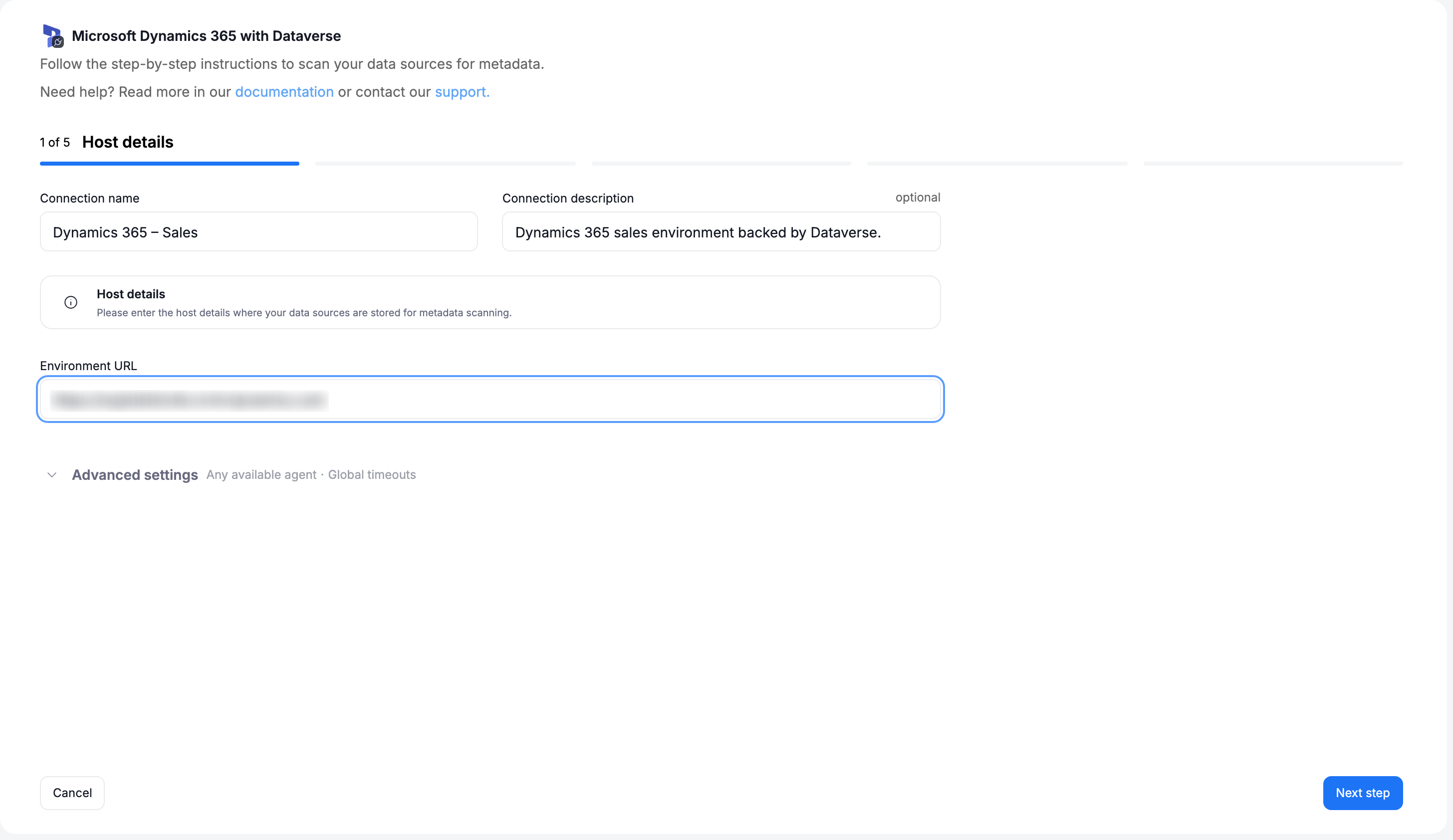
Advanced settings is optional — you can leave it collapsed and the connection will run on any available agent with the global timeouts. Expand it if you want to restrict the connection to a specific agent or override the task timeouts.
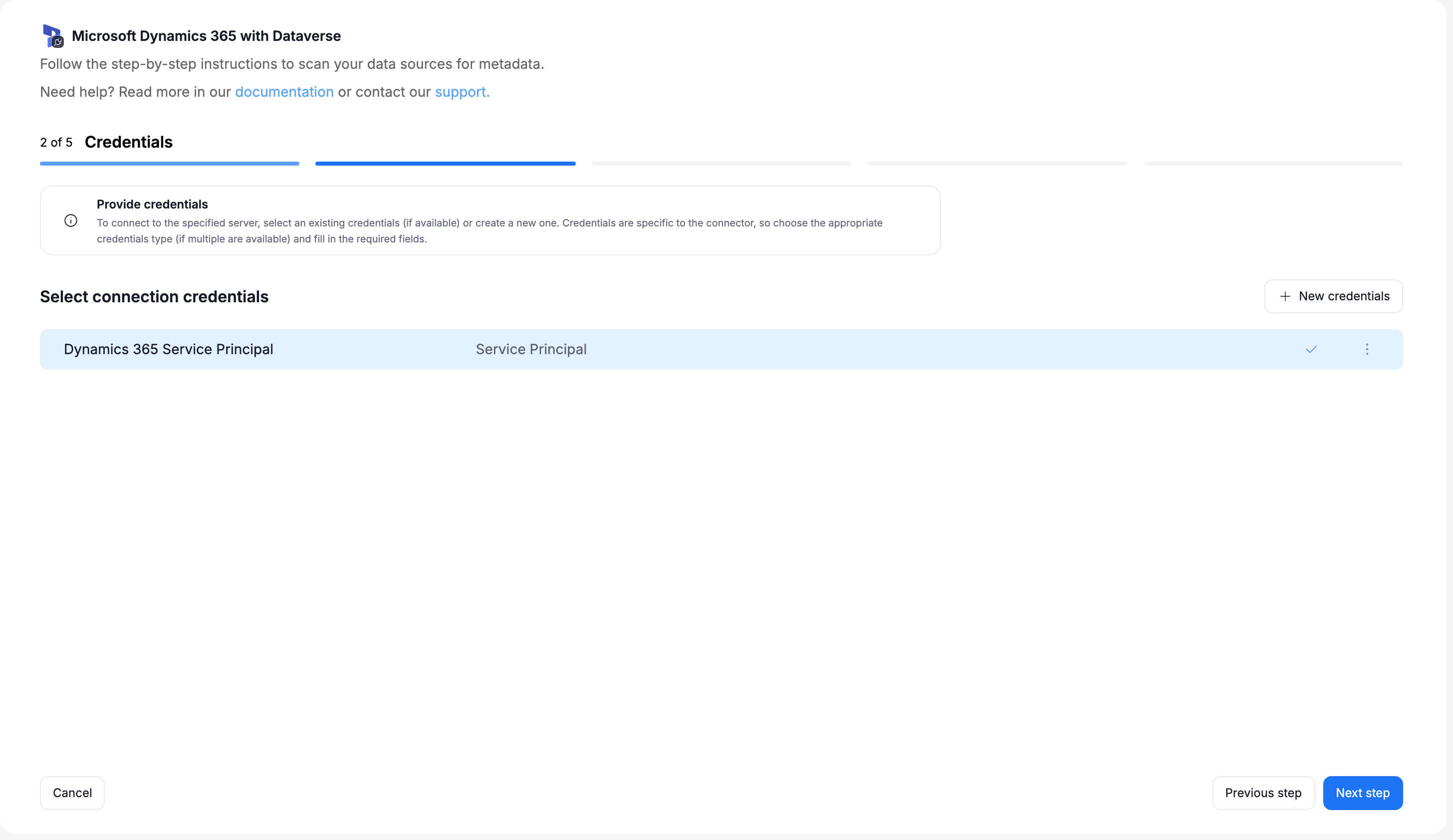
Step 2. Credentials
Choose credentials from the list of existing ones available for the selected connector, or add new credentials. See Connection details below for the values each authentication method needs.
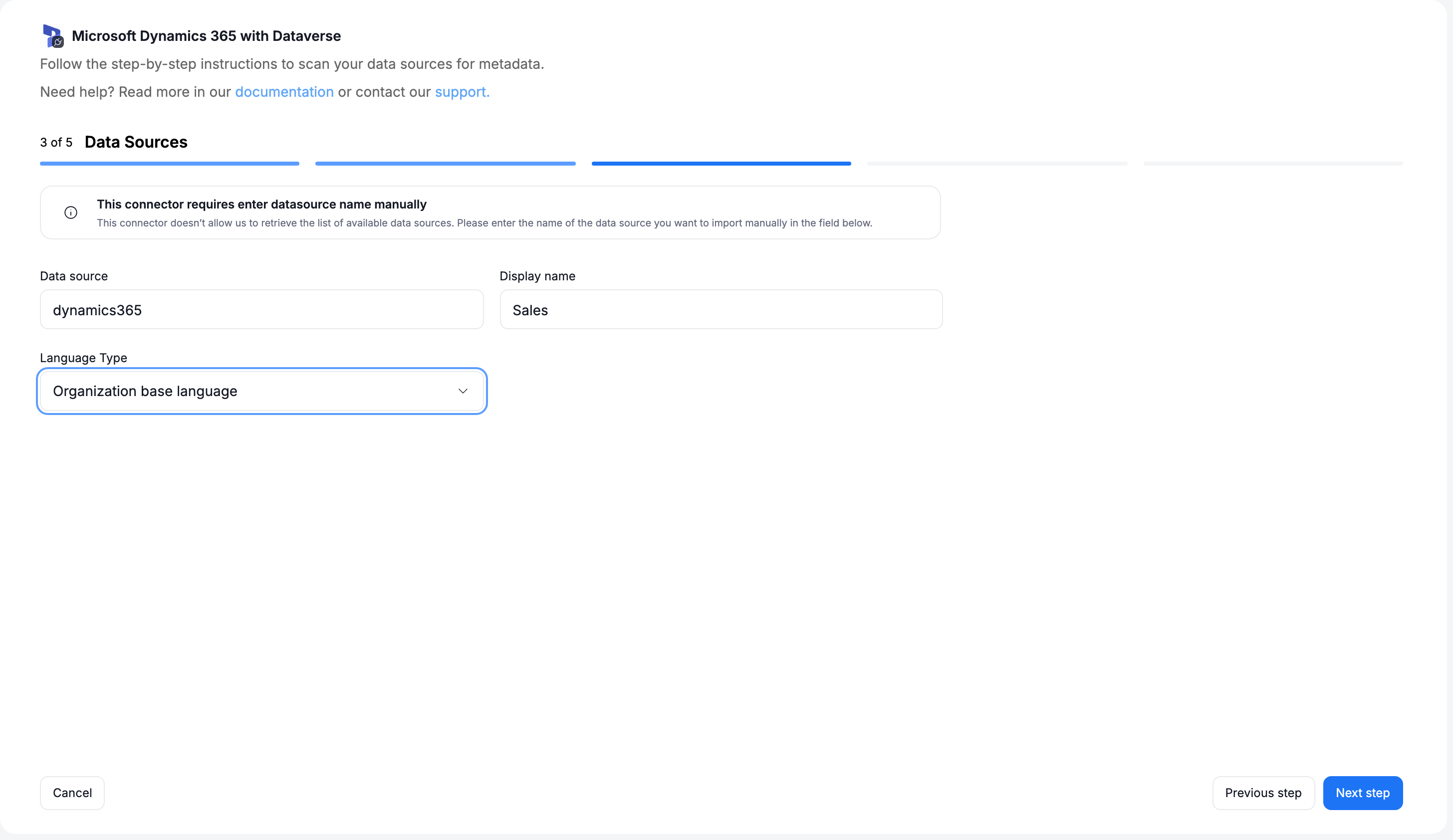
Step 3. Data Sources
This connector cannot retrieve the list of available data sources, so the source has to be entered manually:
- Data source - the name of the data source you want to import
- Display name - the name under which the source will be visible in Dataedo
- Language Type - either Organization base language (the default language set by the organization) or User localized language (the language of the account used to connect)
Step 4. Objects to import
Choose which object types to import: Tables, Views, and Application Forms. Dataverse has no schemas, so you make the selection under the Future Schemas node, and it applies to everything the connector finds.
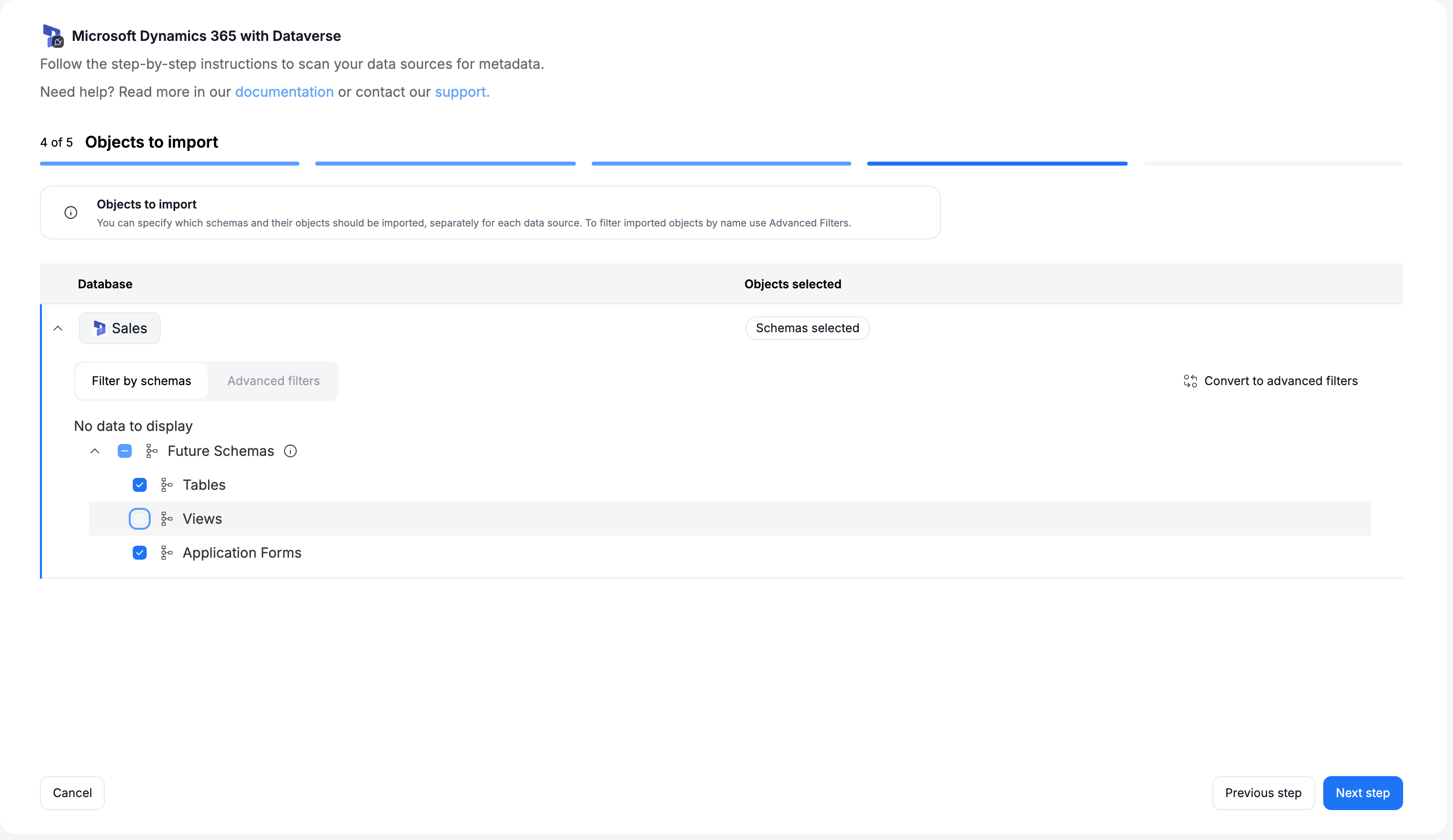
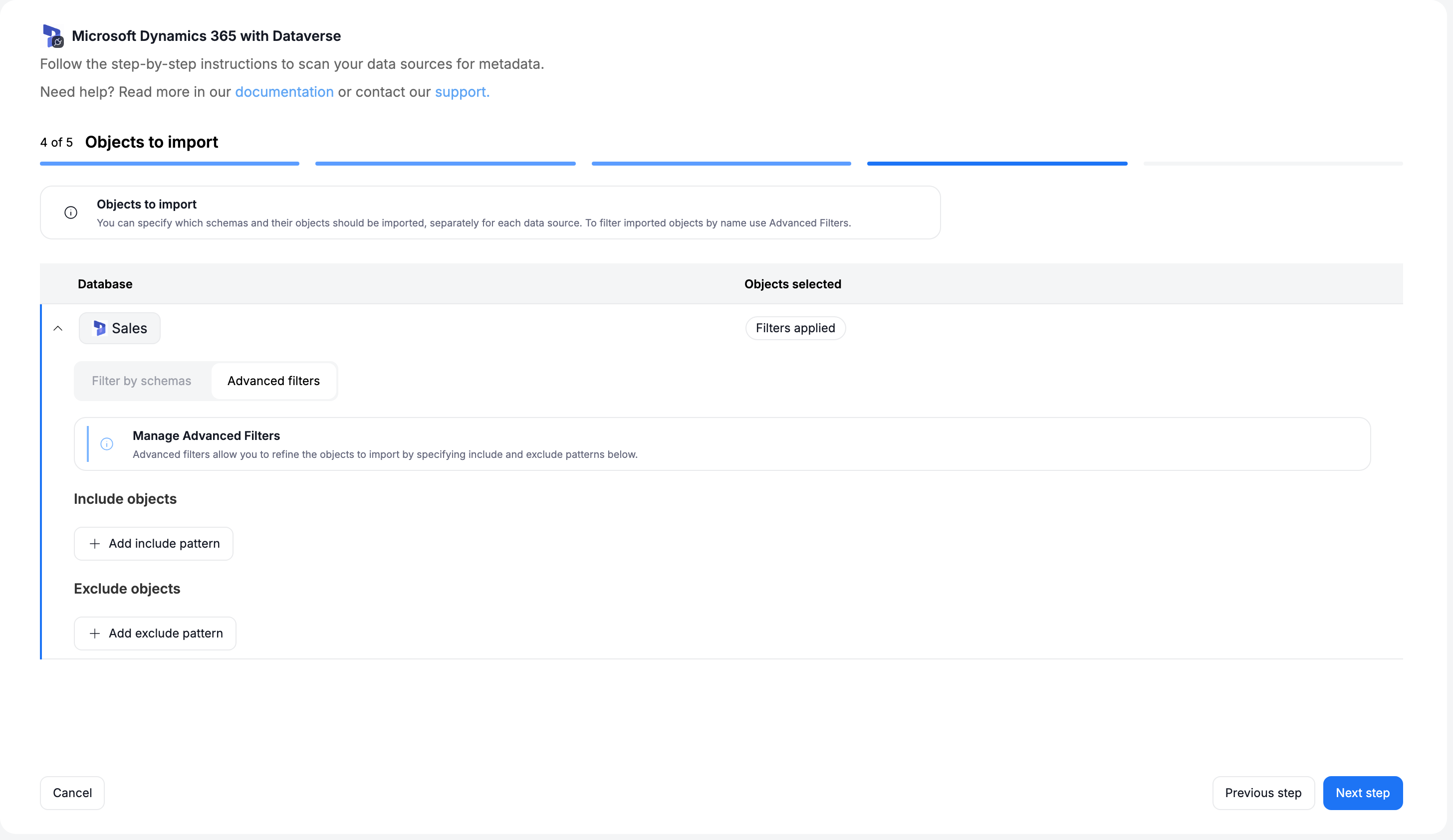
Switch to Advanced filters to include or exclude objects by name pattern and object type instead.
Step 5. Schedule
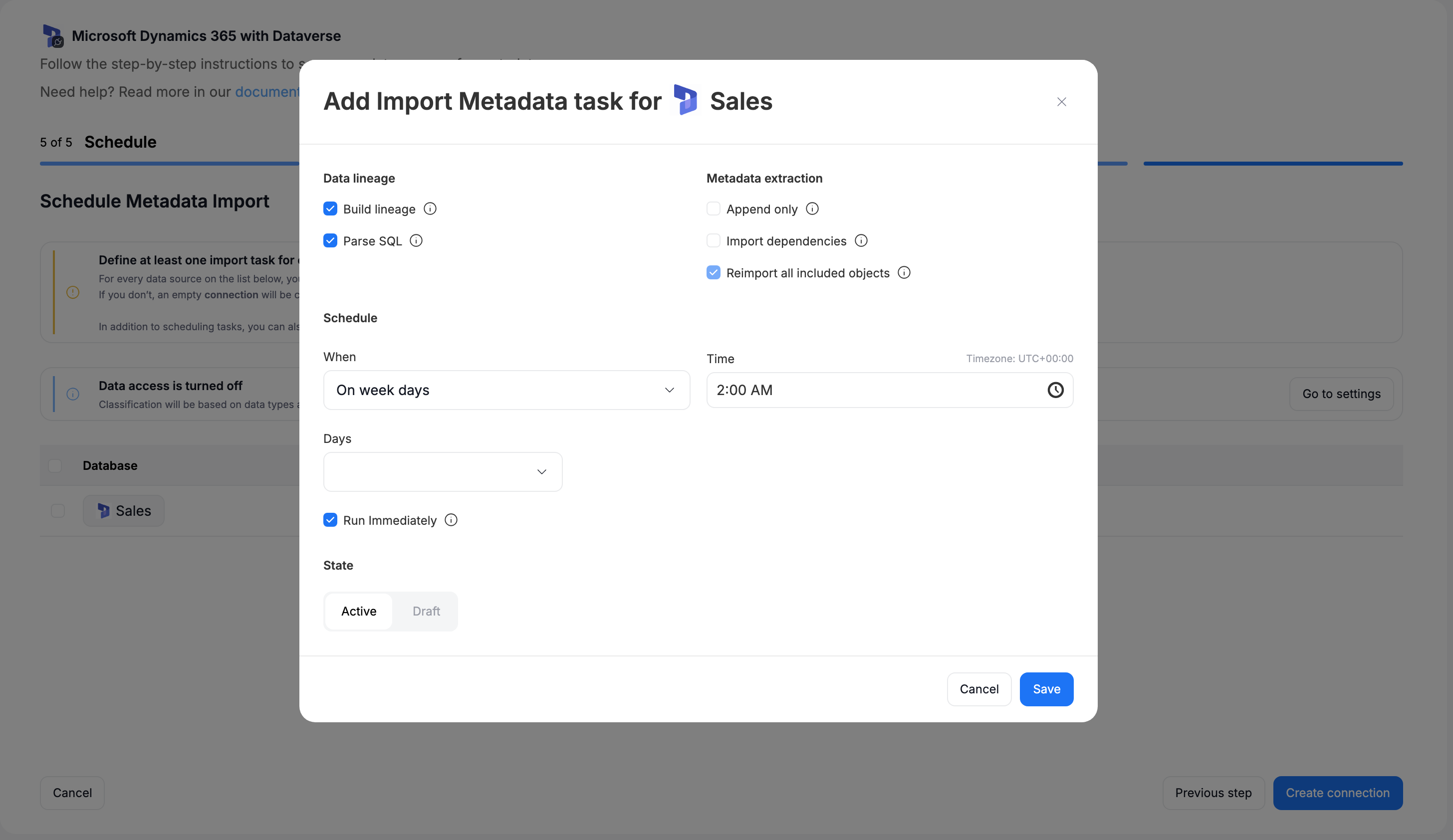
Configure the Metadata Import task for the source:
- choose the data lineage options (
Build lineage,Parse SQL) and metadata extraction options (Append only,Import dependencies,Reimport all included objects) - run daily, on selected weekdays, or on specific days of the month
- choose an exact time of execution
- Task state:
Active- the task will run as scheduledDraft- the task is saved but not executed until you switch it to Active
- Run Immediately - when checked, the task will also be executed right after you click
Create connection
Once saved, the task appears next to its source in the schedule list.
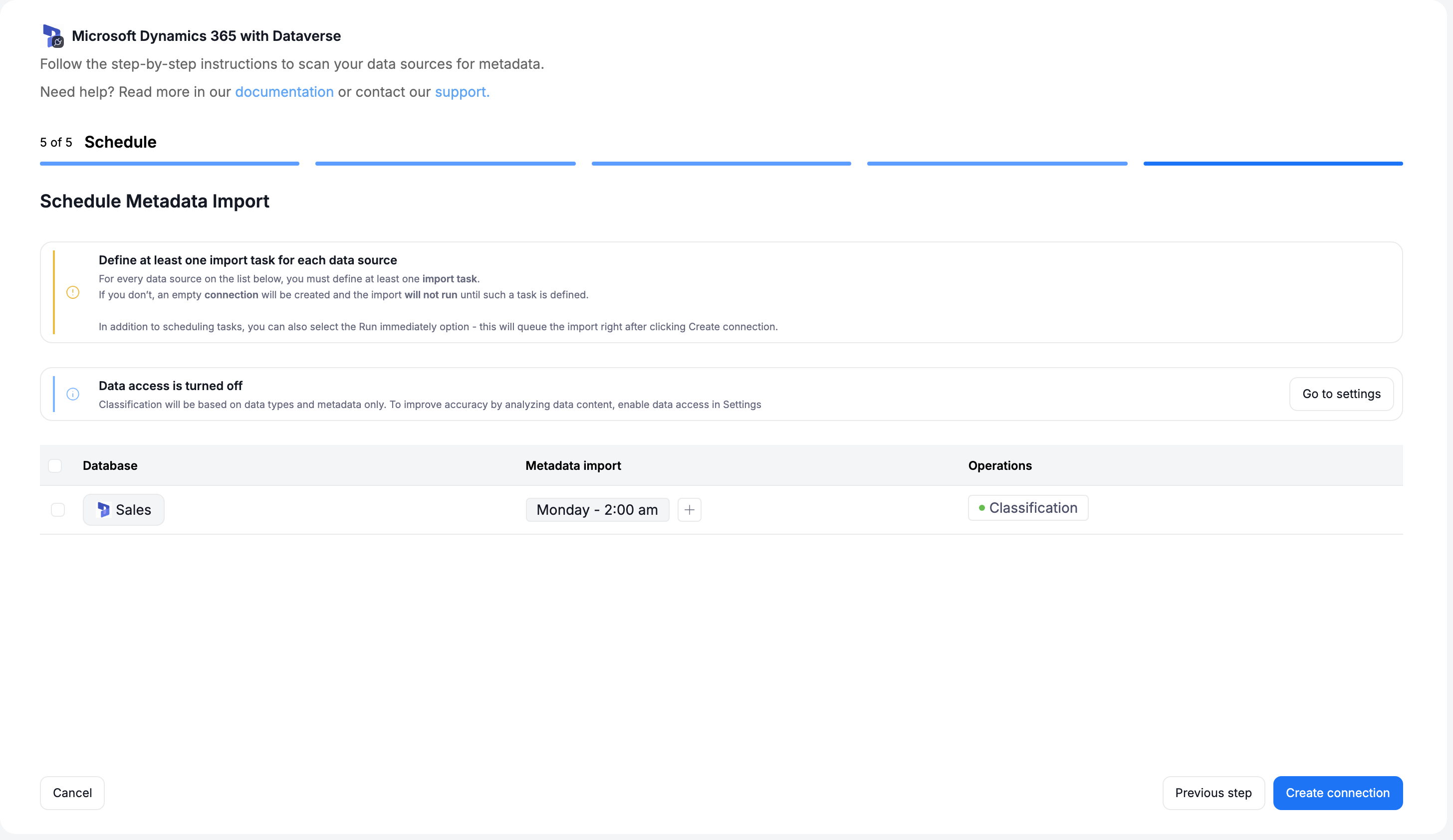
You must configure at least one import task in the schedule section.
If you skip this, an empty database will be created and no metadata will be imported.
Importing Metadata in Dataedo Desktop
Add new connection
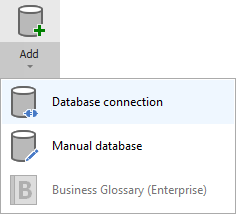
To connect to Dataverse and create new documentation click Add documentation and choose Database connection.
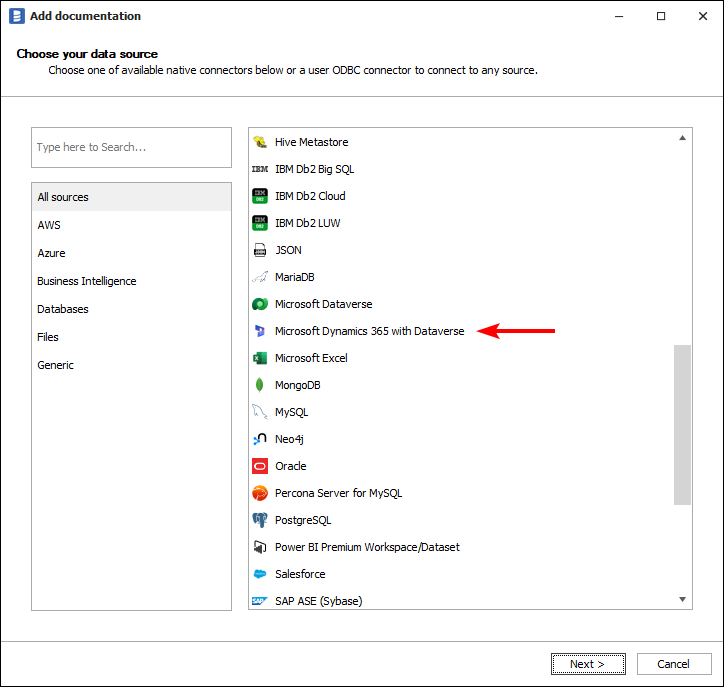
On the connection screen choose Microsoft Dynamics 365 with Dataverse as DBMS.
Connection details
You can connect to Office 365 with Dataverse using two authentication methods:
Interactive Authentication
- Environment URL - URL to your Office 365 instance (e.g., org432482.crm4.dynamic.com)
- Authentication Type: Select "Interactive"
- App ID - Application ID. The default App ID is provided by Microsoft for tests and development purposes. If you'd like to change it, set up an application with the Microsoft identity platform. Learn more
- Redirect URI - Redirect URI needs to match a URI set up with your Microsoft identity app. The default Redirect URI is provided by Microsoft and meant for tests and development. Learn more
- Language
- User localized language - The language the current user has the account set up
- Organization base language - Default language enabled and set by the organization
Service Principal Authentication
To use Service Principal authentication, follow these steps:
-
Create App Registration in Azure Portal
- Sign in to the Azure portal
- Navigate to "Azure Active Directory" > "App registrations"
- Select "New registration"
- Name your application (e.g., "Dataedo Integration")
- Choose "Accounts in this organizational directory only"
- Click "Register"
-
Configure API Permissions
- In your app registration, go to "API permissions"
- Click "Add a permission"
- Select "Office 365 Exchange Online"
- Choose "user_impersonation"
- Click "Add permissions"
- Click "Grant admin consent for [Your Tenant]"
-
Create Client Secret
- Go to "Certificates & secrets"
- Click "New client secret"
- Add description and set expiration
- Copy the secret value immediately (it won't be visible later)
-
Add Application User in Microsoft 365 Admin Center
- Go to Microsoft 365 Admin Center
- Navigate to Users > Active users
- Click "Add a user"
- Add your registered application and assign necessary admin roles
-
Configure in Dataedo
- Environment URL: Your Office 365 instance URL
- Authentication Type: Select "Service Principal"
- Application (client) ID: Paste from Azure Portal
- Client Secret: Paste the secret value
- Tenant ID: Paste the Directory (tenant) ID
- Language: Select preferred language option
Note: When using Service Principal authentication, ensure all values are copied exactly as shown in Azure Portal and that proper permissions have been granted in Microsoft 365 Admin Center.
How to get Environment URL
Go to your Dynamics 365 dashboard and copy the URL from the top search bar.
Saving password
You can save the password for later connections by checking the Save password option. Passwords are securely stored in the repository database.
Importing schema
When the connection was successful Dataedo will read objects and show a list of objects found. You can choose which objects to import. You can also use an advanced filter to narrow down the list of objects.
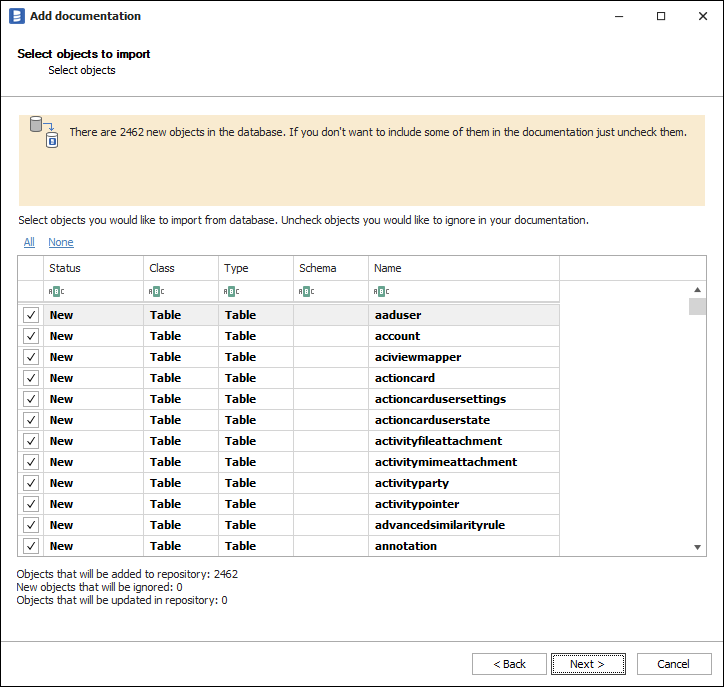
Confirm the list of objects to import by clicking Next.
The next screen allows you to change the default name of the documentation under your schema will be visible in the Dataedo repository.
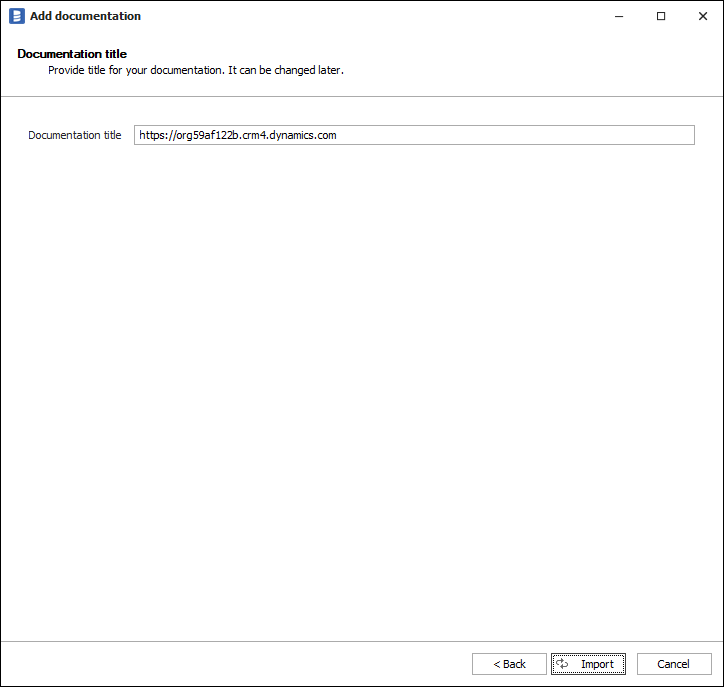
Click Import to start the import.
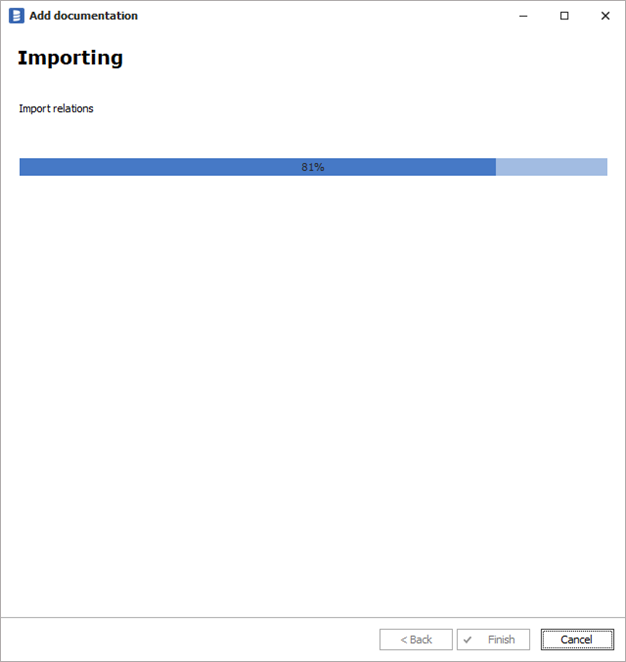
When done close the import window with the Finish button.
Outcome
Your database schema has been imported to new documentation in the repository.
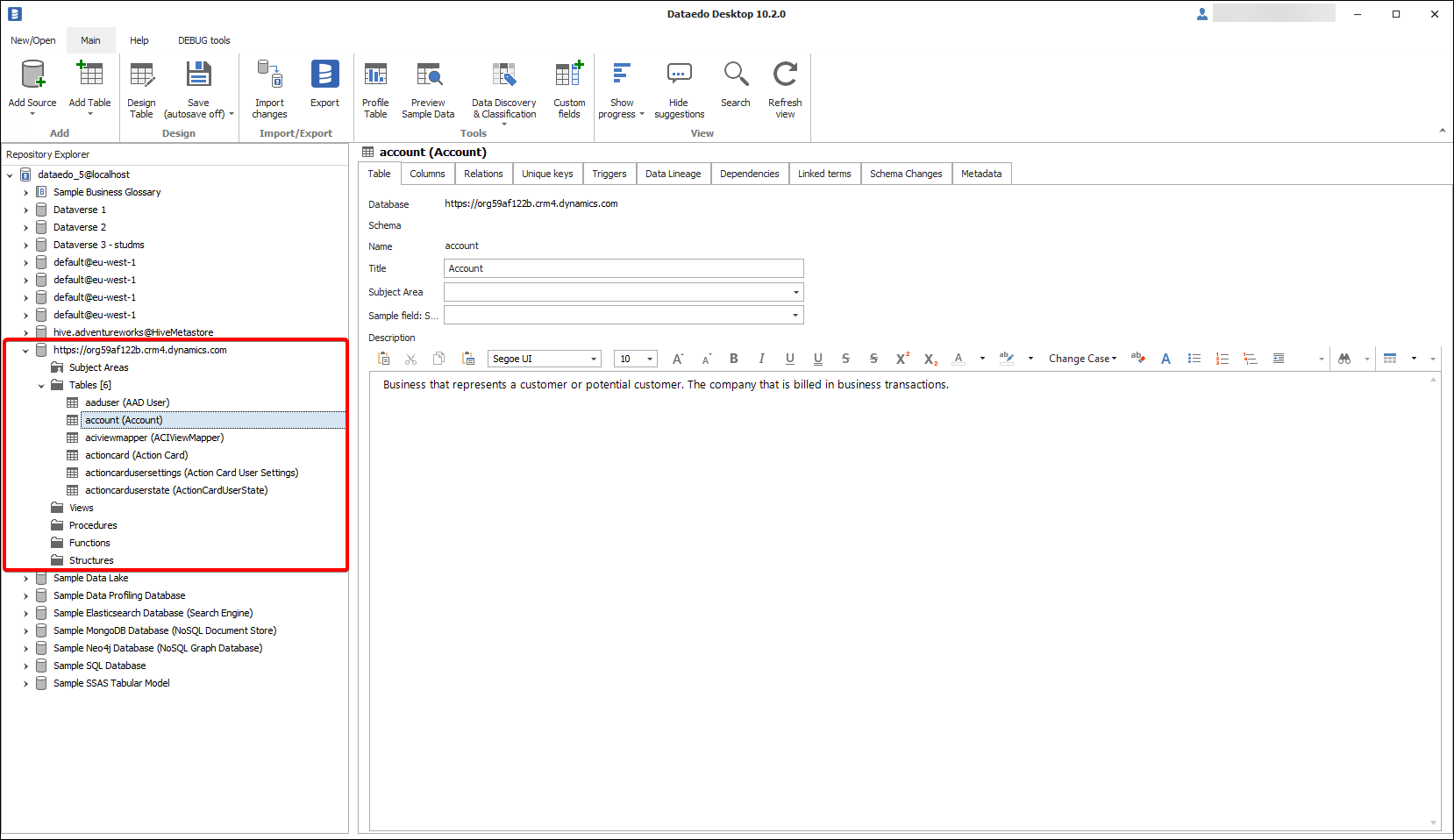
Supported schema elements and metadata
Connector specification
Tested environments
Dataedo connection was tested with the following application/environments:
- Dynamics 365 Sales
- Dynamics 365 Marketing
- Dynamics 365 Customer Insights
Imported objects
| Object | Imported as |
|---|---|
| Table | Table |
| View | View |
| Form | Form |
Tables metadata
| Metadata | Imported as |
|---|---|
| Name | Name |
| Description | Description |
| Columns | Columns |
| Name | Name |
| Title | Title |
| Data type | Data type |
| Description | Description |
| Primary keys | Primary keys |
| Unique keys | Unique keys |
Views metadata
| Metadata | Imported as |
|---|---|
| Name | Name |
| Schema | Schema |
| Description | Description |
| Script | Script |
| Columns | Columns |
| Name | Name |
| Title | Title |
| Data type | Data type |
| Description | Description |
Forms metadata
| Metadata | Imported as |
|---|---|
| Name | Name |
| Columns | Columns |
| Name | Name |
| Position | Position |
| Data type | Data type |

