Getting Started with Steward Hub
You can access Steward Hub by navigating to the Steward Hub section in the Dataedo navigation tree.
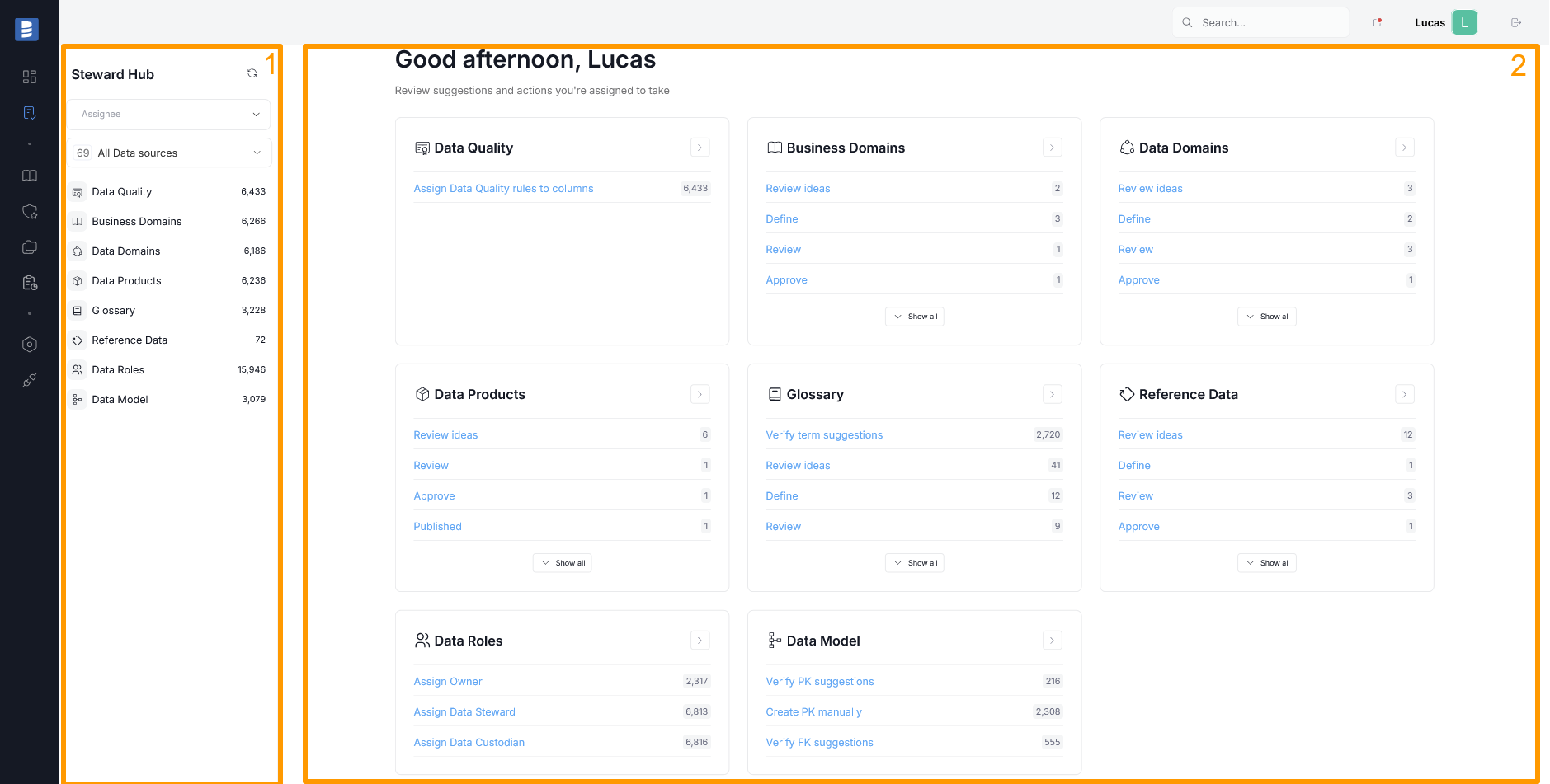
You will see a new window containing the home page, with a Summary menu on the left [1], and a set of modules in the center [2]. These will be crucial in navigating the Steward suggestions.
Refresh Suggestions
Suggestions are generated based on the extracted metadata, Workflows, and contents of your Dataedo catalog. Suggestions are refreshed automatically every time your Portal is updated.
You can also refresh the suggestions manually by pressing the refresh button in the Steward Hub's sidebar. We suggest doing this periodically, especially after major changes to your repository.
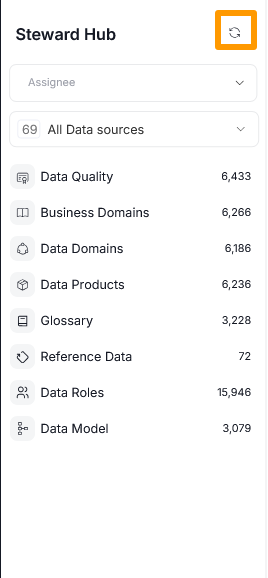
Refreshing suggestions does not connect to source databases.
Sidebar
Filtering
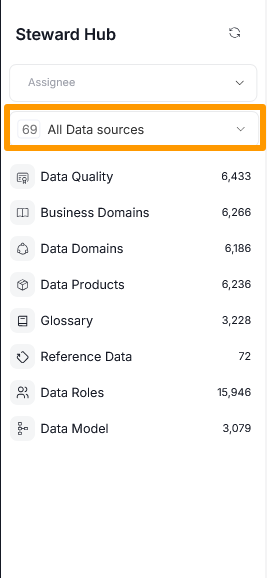
Using the sidebar, you can filter suggestions by data source. This is useful when you want to focus on documenting only a part of your Data catalog. When you click the Data Sources bar, you can select Data Source(s) you want to include in your filter search. Suggestions are shown only for the selected sources. By default, all sources are selected.
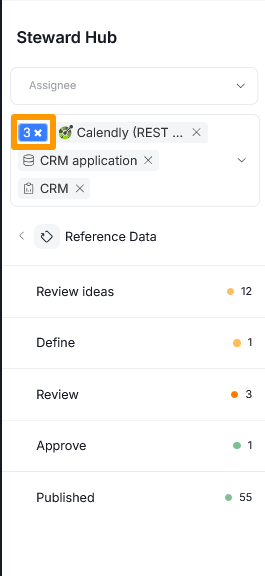
If you have selected some sources, but want to return to a view of your entire catalog, you can remove the filter by clicking on the X, next to the number of selected sources.
Navigation
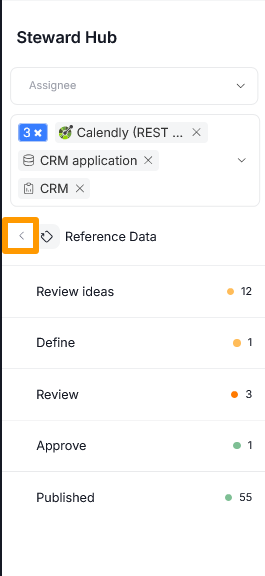
Sections requiring improvement are shown in the sidebar as well. When you click a module name, the sidebar view will change, now showing categories of suggested changes. Clicking one of them, will open the relevant suggestions in the main section of the Steward Hub.
You can use the Back button to navigate back to previous pages of the sidebar, and quickly exit the opened suggestion.
Main Section
In the main section of the Steward Hub, you can see up to eight modules corresponding to crucial areas for proper data documentation and data governance - Data Quality, Business Domains, Data Domains, Data Products, Glossary, Reference Data, Data Roles, and Data Model. Each of these modules contains a list of suggested actions. The suggestions are created and shown dynamically based on the state of your repository, and your User Role.
For example, if your Data model is set up properly, and all primary keys and foreign keys are tagged, you will not see any suggestions in the Data Model module — an example of interaction with your repository state. Similarly, if you are not an Approver, you will not be able to see suggestions related to objects in In review or Ready to publish status in the Data Domains module — an example of a User Role-based interaction.

